

Colours of Consciousness
Among the many festivals celebrated across India, HOLI occupies a space that is uniquely vibrant and deeply symbolic. At first glance, it appears to be a celebration of colour, laughter and unrestrained joy. Yet beneath the playful clouds of gulaal and the cheerful gatherings lies a civilisational message that has endured for centuries. HOLI is not merely an event on the calendar; it is a cultural expression of renewal.
Within the Indian philosophical tradition, the removal of what is unnecessary and harmful has always been regarded as essential for spiritual progress. The ritual of Holika Dahan, the ceremonial bonfire lit on the eve of HOLI, is often narrated through the well-known story of Bhakt Prahlad and his aunt Holika. Yet in Indian culture, mythology frequently operates through symbolism rather than literalism. The true significance does not lie in the burning of wood, but in the burning of inner negativity. The fire represents the transforming power of higher awareness.
The dry logs placed upon the bonfire may be seen as metaphors for our hardened tendencies, ego, resentment, jealousy, intolerance, and the subtle arrogance that distances us from one another. These inner thorns wound more deeply than any external adversary. When allowed to accumulate, they render relationships brittle, fragment communities, and sow divisions even within nations. To participate in Holika Dahan, therefore, is to make a quiet inner resolve. What within me must be offered to the flames? Which habit, which bitterness, which prejudice has outlived its purpose?
For the Indian diaspora spread across continents, from North America and Europe to Africa, the Middle East and Southeast Asia, HOLI carries an added resonance. Far from ancestral soil, the festival becomes a bridge to memory. A handful of colour in a distant land can evoke childhood lanes, familiar fragrances and the warmth of shared belonging. Second and third-generation Indians often rediscover their cultural inheritance through such celebrations. What begins as curiosity matures into continuity. In this way, HOLI has become an instrument of India’s gentle cultural presence across the world.
Yet the growing global popularity of HOLI also carries responsibility. Joy must not slip into excess, and celebration must never descend into insensitivity. Eco-friendly colours, mindful use of water, and dignified conduct ensure that festivity does not burden the very environment it seeks to honour.
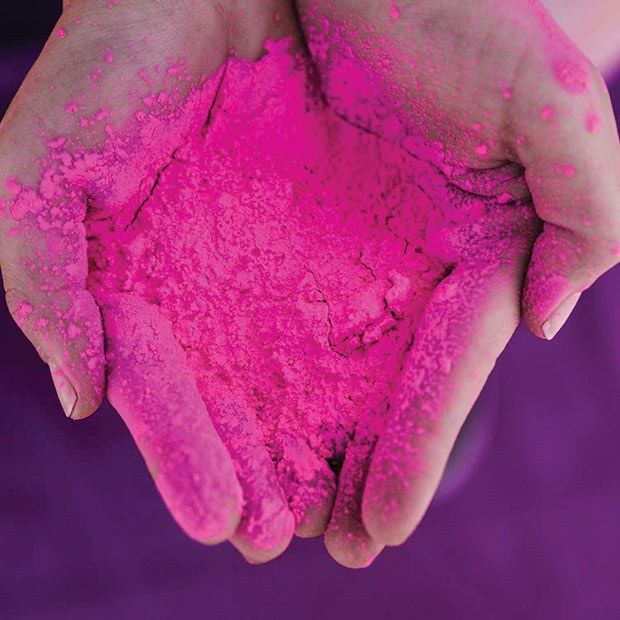
Let this year’s HOLI not remain confined to colours that fade by evening, but become a transformation that lingers in thought and action throughout the year. The truest gulaal is goodwill. The most beautiful colour is understanding. The most enduring celebration is inner lightness. A society does not transform merely through policies or slogans; it evolves when individuals refine their attitudes.
HOLI’s message is therefore quietly revolutionary. It does not shout reform; it invites self-purification. It does not demand uniformity; it nurtures harmony. If we return each year only to repeat the outward ritual, we may taste momentary excitement yet miss its enduring wisdom. But if we pause, even briefly, to renew ourselves within, HOLI becomes more than a seasonal festival. It becomes a life philosophy.
Perhaps the highest tribute to this ancient celebration would be this: that after the colours have washed away, something pure remains. A lighter heart. A reconciled friendship. A kinder intention. A renewed commitment to live with dignity and mutual respect. Then it may truly be said that we did not merely “play” HOLI. We understood it. And in understanding it, we allowed it to colour our consciousness.
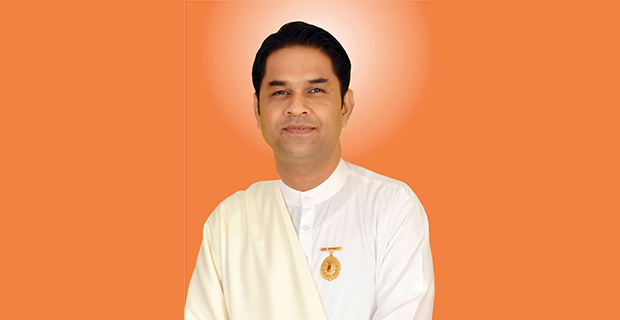
(The writer is a spiritual educator and a popular columnist for publications across India, Nepal and the UK. To date, he has written over 9,000 published columns. He may be reached at nikunjji@gmail.com | www.brahmakumaris.com)
Related News.
-

October 2026 A NEW CHAPTER
-

October 2026 “We Can Be A Gateway”
-

October 2026 “Come And See Ecuador”
-

October 2026 Confidence Across Continents
India Empire TV


EDITOR'S DESK, Oct 2026
 The October 2026 issue of India Empire explores a world in which diplomacy, commerce, innovation and human connections increasingly shape one another. Across our stories, a recurring theme emerges: relationships acquire lasting value when goodwill is translated into practical outcomes...
more...
The October 2026 issue of India Empire explores a world in which diplomacy, commerce, innovation and human connections increasingly shape one another. Across our stories, a recurring theme emerges: relationships acquire lasting value when goodwill is translated into practical outcomes...
more...
Ads Spot

Comments.