

INDIA–NIGERIA TECH
India’s digital public infrastructure offers a scalable model for Nigeria’s transformation.
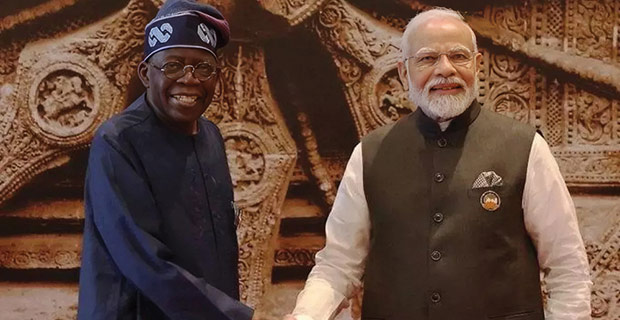
New Delhi: India’s MoUs with Nigeria on sharing digital technology provide the African nation an opportunity to emulate a successful model already tested at population scale in delivering social welfare services, education and job creation, marking a significant step in digital cooperation between the two countries.
The MoUs were signed in New Delhi in March when Nigeria’s Minister of Communications, Innovation and Digital Economy, Mr Bosun Tijani, agreed on two key frameworks: one with India’s Ministry of Electronics and Information Technology (MeitY) and another with the Central Square Foundation, an Indian EdTech-focused organisation, laying the foundation for long-term institutional cooperation.
“For millions of young Nigerians who dream of building the next African tech giant, or for parents who simply want their children to access better education and services, the digital-technology partnership Nigeria signed with India in 2023 was not just a dry diplomatic agreement; it was a quiet but powerful turning point,” according to an article in India Narrative written by Chukwudi Okeke, Startup Mentor and co-founder of Nigeria Innovation Hub in Lagos.
India did not just build a digital economy; it rewired how a billion people interact with government, banks and schools, and Nigeria, with its vast population, youthful energy and infrastructure challenges, now has an opportunity to adapt that experience into tangible progress for ordinary citizens.
The MeitY agreement focuses on sharing digital solutions, particularly in e-governance, digital identity and public service delivery, while the Central Square pact targets technology-enabled education and digital learning infrastructure in Nigeria’s public schools and training institutions, creating a framework for structured technology transfer and joint pilot projects.
Nigeria’s ambition is clear: to create one million digital economy jobs by 2025 and raise digital literacy levels among its youth, and choosing India as a partner reflects confidence that digital transformation can be executed at scale with planning, funding and political will.
India’s digital state architecture, including Aadhaar, India Stack and the Unified Payments Interface (UPI), has transformed a paper-based economy into one where hundreds of millions can access banking, government services and real-time payments through mobile phones, offering Nigeria a near-ready template for public-tech infrastructure.
Related News.
-

September 2026 Gorillas Find Names
-

September 2026 India–Kiribati Deepen Cooperation
-

September 2026 India, Ethiopia Deepen Defence Ties
-

September 2026 JAMAICA AT 64,TIES DEEPEN

EDITOR'S DESK, Sep 2026
 Our cover takes us to Volcanoes National Park, where Rwanda recently hosted the 21st Kwita Izina, its annual Gorilla Naming Ceremony. Twenty-two baby mountain gorillas received their names, but the significance of the occasion went far beyond a celebration of wildlife...
more...
Our cover takes us to Volcanoes National Park, where Rwanda recently hosted the 21st Kwita Izina, its annual Gorilla Naming Ceremony. Twenty-two baby mountain gorillas received their names, but the significance of the occasion went far beyond a celebration of wildlife...
more...
Ads Spot


Comments.