

Wismar Remembered Deeply
A deeply researched work revisits a painful chapter in Guyana’s history, blending lived experience with rigorous analysis and reflection.
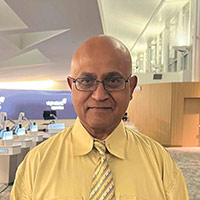
Dr Vishnu Bisram
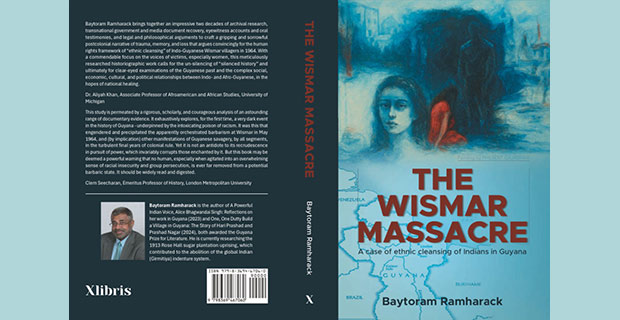
The highly regarded academic Prof Baytoram Ramharack has penned an authoritative book on the Wismar Massacre that took place in 1964. It is a sharp, detailed, in-depth study of that tragic episode in Guyana’s history, a critically acclaimed, no-holds-barred account written as an academic text yet accessible to general readers, and enriched with analysis of the nationalist and ethnic politics of that period.
Guyanese growing up during the early 1960s would be acutely aware that British Guiana experienced a turbulent and traumatic pre-independence history. The nationalist struggle initiated by Cheddi Jagan and the People’s Progressive Party (PPP) was tainted by ethnic animosity and racial conflict between Africans led by Forbes Burnham and Indians led by Jagan. The European colonisers, in collaboration with some local politicians, encouraged these divisions to prevent the Jagan-led Marxist government from assuming full control of an independent British Guiana. The effects of those divisions remain, to some extent, even six decades after independence.
The Wismar Massacre refers to the siege of the minority Indian population residing in the Wismar and Christianburg communities during May 1964. A series of attacks, including physical violence, sexual assaults, looting and arson, led to the forced migration of more than 3,000 Indian residents from the area. Several were brutally killed, although the exact number remains contested. Unlike other areas, no adjacent community offered protection or refuge, making the events at Wismar particularly devastating.
Janet Jagan, then Home Affairs Minister, resigned in the aftermath, citing credible evidence of collusion between perpetrators and members of the British Guiana Police and Volunteer Force. The attacks, described as “planned” and “organised” by the Commission of Inquiry, are characterised by Ramharack as a case of ethnic cleansing, a view echoed by other writers.
The book presents in-depth research into the causes of the massacre and examines its impact on post-independence race relations in Guyanese society. It reflects on how Linden (Wismar/McKenzie) today is largely devoid of its once vibrant Indian business community and its earlier multiethnic character.
Ramharack cautions that an examination of what happened in Wismar should not be used by any group to claim victimhood or moral superiority. At the same time, he argues that the voices and experiences of the Indian victims have long been marginalised, with lingering uncertainty over land, property, and the absence of sustained political advocacy since that period.
Drawing on the Wismar Commission Report, eyewitness testimonies, and official correspondence—including previously classified exchanges between colonial authorities—the study represents a monumental research effort spanning decades. It also incorporates oral histories and extensive documentation to capture the full historical scope of the tragedy.
This publication is likely to generate significant debate, particularly alongside other events of 1964 such as the Son Chapman explosion. It raises important questions about whether Guyanese society has missed opportunities for meaningful dialogue, reconciliation, and national healing.
For younger generations, the book stands as a valuable resource for understanding how historical events shaped the political culture of post-independence Guyana and continue to influence its present.
Related News.
-

October 2026 A NEW CHAPTER
-
September 2026 Gorillas Find Names
-

September 2026 India–Kiribati Deepen Cooperation
-

September 2026 India, Ethiopia Deepen Defence Ties


Comments.