

Waterways Surge Ahead
India’s inland waterways record historic cargo and passenger growth, signalling a structural transport shift.
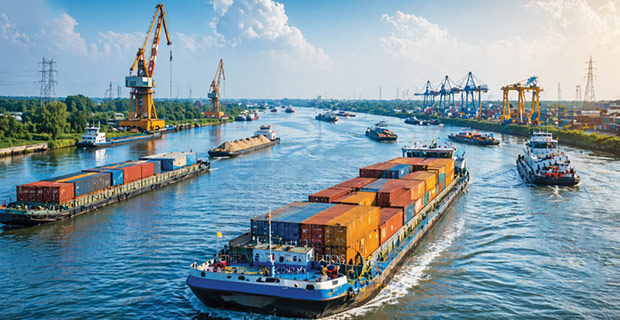
New Delhi: Cargo transportation through India’s National Waterways reached an all-time high of 145.84 million metric tonnes in FY25, while passenger traffic rose sharply to 7.6 crore in 2024-25 from 1.61 crore the previous year, reflecting a significant shift towards water-based transport systems.
India currently has 111 National Waterways spanning 20,187 kilometres, with 32 operational waterways covering 5,155 kilometres. The government has projected that the number of operational waterways will increase to 52 over the next five years, indicating a steady expansion of inland water transport infrastructure.
Cargo movement continues to grow, with volumes reaching 198 million metric tonnes in FY26 up to February. At the same time, the combined cargo handling capacity of major ports has risen significantly, while turnaround time for container vessels has improved considerably, highlighting gains in efficiency across the maritime sector.
Policy initiatives are reinforcing this momentum. The Union Budget 2026-27 announced plans to operationalise 20 new National Waterways and introduced a Coastal Cargo Promotion Scheme aimed at shifting freight from road and rail to waterways, improving sustainability and reducing congestion.
The government’s long-term vision includes increasing the share of inland waterways and coastal shipping from 6 per cent to 12 per cent by 2047. Projects such as the development of National Waterway-5 in Odisha are expected to connect mineral-rich regions with industrial centres and ports, boosting economic activity.
In addition, training institutes and ship repair ecosystems are being planned along key waterways, ensuring that infrastructure growth is supported by skilled manpower and institutional capacity, positioning the sector for sustained expansion.
Related News.
-

September 2026 Beyond Four Walls
-

September 2026 Tewolde Takes Charge
-

September 2026 Minerals Drive Engagement
-

September 2026 APEDA Opens Global Doors



Comments.