

Jaishankar Deepens Engagement
External Affairs Minister S. Jaishankar’s Moscow visit in November blended strategic diplomacy, community outreach, and a major expansion of India’s consular footprint across Russia.
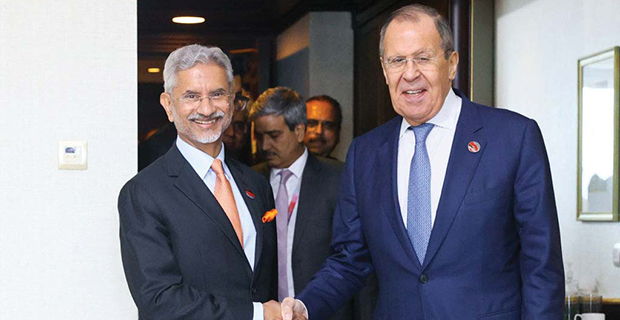
External Affairs Minister S. Jaishankar marked a significant milestone in India–Russia relations with the inauguration of two new Consulates General in Yekaterinburg and Kazan. Speaking at the ceremony, he described the day as “important” for both countries, emphasising that opening new consular posts represented more than administrative expansion—it represented the beginning of a new phase of deeper engagement, broader access, and stronger institutional ties across Russia’s vast landscape.
He noted that months of coordinated work had gone into establishing the consulates, and appreciated the support extended by the Russian government at federal and regional levels. Russian Deputy Foreign Minister Andrey Rudenko, Indian Ambassador Vinay Kumar, and local representatives from Yekaterinburg and Kazan were present at the event, underlining the collaborative effort behind the expansion.
Yekaterinburg, often termed Russia’s “third capital,” is a hub of heavy engineering, metallurgy, nuclear fuel processing, gem cutting, and specialised manufacturing. Its strategic position as a gateway to Siberia and as host of INNOPROM — one of Russia’s premier international industrial exhibitions — makes it an ideal location for boosting technological, scientific, and economic partnerships. Jaishankar stressed that the new consulate would give further impetus to collaboration between Indian and Russian industries.
Strengthening People-to-People Ties
Kazan, known for its distinct multicultural heritage, was highlighted by Jaishankar as a bridge between Russia and Asia. With its strong sectors in oil production, refining, automobiles, defence equipment, pharmaceuticals, and electrical goods, the region is poised for deeper cooperation with India. The EAM said the new consulate would strengthen cultural exchanges, promote tourism, support academic linkages, and enhance ITEC participation.
He underscored that the Indian diaspora, business community, and especially Indian students would benefit greatly from consular services in both regions. The opening of these posts, he said, would not only enhance India’s diplomatic presence but also act as catalysts for increased trade, tourism, technological cooperation, and academic partnerships.
Engaging the Indian Community
Before concluding his Moscow visit, Jaishankar met members of the Indian community along with Ambassador Vinay Kumar. He described the interaction as warm and energising, noting that the diaspora has played an important role in strengthening the fabric of India–Russia friendship.
The meeting offered an opportunity to brief community members on the day’s developments, including the inauguration of the two consulates, and to hear their views on bilateral cooperation. The Indian community in Moscow, comprising professionals, students, businesspersons, and long-term residents, remains an active partner in advancing India’s cultural and economic outreach.
During his engagements, the EAM also paid homage to Mahatma Gandhi in Moscow, stating that the Mahatma’s ideals remain “more relevant than ever” in a world grappling with conflict, polarisation, and competing global narratives.
Related News.
-

September 2026 Gorillas Find Names
-

September 2026 India–Kiribati Deepen Cooperation
-

September 2026 India, Ethiopia Deepen Defence Ties
-

September 2026 JAMAICA AT 64,TIES DEEPEN

EDITOR'S DESK, Sep 2026
 Our cover takes us to Volcanoes National Park, where Rwanda recently hosted the 21st Kwita Izina, its annual Gorilla Naming Ceremony. Twenty-two baby mountain gorillas received their names, but the significance of the occasion went far beyond a celebration of wildlife...
more...
Our cover takes us to Volcanoes National Park, where Rwanda recently hosted the 21st Kwita Izina, its annual Gorilla Naming Ceremony. Twenty-two baby mountain gorillas received their names, but the significance of the occasion went far beyond a celebration of wildlife...
more...
Ads Spot

Comments.