

“India is rewarding, dynamic”
In this exclusive interview with Yogesh Sood, Neeraj Bansal, Partner and Head India Global, KPMG in India, shares insights on India’s evolving economic landscape, regional influence, and the opportunities shaping global investment flows. Bansal discusses key sectors attracting foreign investment, geopolitical realignments, emerging corridors with the Gulf, ASEAN, and Africa, and India’s long-term development vision under ‘Viksit Bharat 2047’.
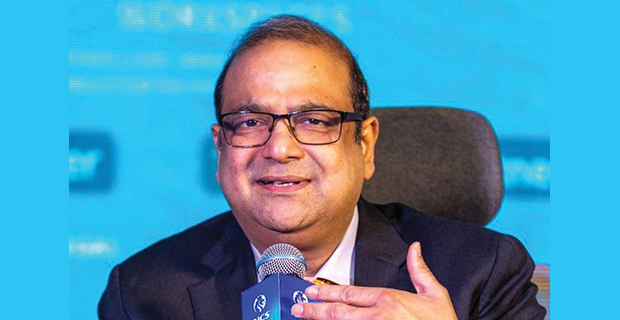
India is now the world’s fastest-growing large economy. From your vantage point, what sectors are drawing the most foreign investor attention?
Investors are drawn to infrastructure and renewable energy, including roads, ports, urban development, solar, wind, and green hydrogen. Technology and digital platforms—AI, fintech, and cloud—are also seeing strong uptake. For instance, US tech giants have pledged investments worth more than USD65 billion in India’s AI and data centre infrastructure—betting big on India’s growing role as a global tech hub. Advanced manufacturing, pharmaceuticals, and life sciences are continuing to attract global capital. Across all sectors, India’s scale, domestic demand, and long-term growth trajectory make it highly rewarding.
Given your role in building cross-border economic linkages, how do you see India’s regional influence evolving economically and strategically?
India is evolving as both an economic and strategic anchor. Economically, trade integration, energy connectivity, and infrastructure links are deepening, reinforcing India’s role as the region’s largest economy. South Asia is expected to grow at around 6% in the year ahead—remaining the fastest-growing emerging market—and this outlook is heavily influenced by India’s strong trade and economic momentum; without India, regional growth would be far more tepid. Strategically, India also supports neighbours with technology transfer, skill development, and sustainable growth initiatives. This combination of collaboration and stability positions India as a trusted partner across the region.
Given the growing China+1 strategy, is India effectively positioning itself as the preferred alternative? What more needs to be done?
India benefits strongly from China+1, particularly in manufacturing and IT. Over the last decade, FDI equity inflow in the manufacturing sector has increased by close to 70% to over USD165 billion. Market size, skilled labour, and policy reforms are major advantages. That said, the currently evolving global tariff environment highlights the need for faster resolution of trade frictions and greater predictability for exporters. Leveraging existing FTAs, while actively pursuing new deals, will be critical for India to offset tariff pressures and improve market access. Besides, remaining challenges include logistics, last-mile infrastructure, and state-level ease of doing business. Accelerating reforms and sector-specific incentives will strengthen India’s competitiveness.
How are geopolitical realignments—such as the Indo-Pacific strategy and India’s engagement with the Quad—shaping investor confidence?
Geopolitical stability is now integral to investment decisions. India’s active role in the Indo-Pacific and Quad frameworks signals reliability and long-term stability, reassuring investors. It also strengthens supply-chain resilience and opens collaboration in defence, technology, and energy, enhancing investor confidence.
With ‘Viksit Bharat 2047’ gaining traction, how aligned are private and institutional investors with government development goals?
Alignment is increasing. Sovereign funds, institutional investors, and private equity are mapping portfolios to infrastructure, energy transition, and urban development plans. Transparent regulatory frameworks and long-term visibility make participation in high-impact projects easier, supporting India’s 2047 growth trajectory.
Related News.
-

September 2026 Gorillas Find Names
-

September 2026 India–Kiribati Deepen Cooperation
-

September 2026 India, Ethiopia Deepen Defence Ties
-

September 2026 JAMAICA AT 64,TIES DEEPEN
EDITOR'S DESK, Sep 2026
 Our cover takes us to Volcanoes National Park, where Rwanda recently hosted the 21st Kwita Izina, its annual Gorilla Naming Ceremony. Twenty-two baby mountain gorillas received their names, but the significance of the occasion went far beyond a celebration of wildlife...
more...
Our cover takes us to Volcanoes National Park, where Rwanda recently hosted the 21st Kwita Izina, its annual Gorilla Naming Ceremony. Twenty-two baby mountain gorillas received their names, but the significance of the occasion went far beyond a celebration of wildlife...
more...
Ads Spot

Comments.