

Digital World Home
Global South Pride And Responsibility
If Lula provided the historical and ethical frame, Prime Minister Modi used his address to anchor the summit in the present and future responsibilities of nations. Calling it a moment of pride for the Global South, Modi said India hosting the AI Impact Summit reflected both its demographic weight and its technological trajectory.
“I welcome you all to the biggest and most historic AI Summit in the world,” Modi told assembled leaders, ministers, CEOs, researchers, and innovators. India, he said, represents one-sixth of humanity, is driven by a youthful population, and hosts one of the world’s largest technology ecosystems. It is a country that not only adopts new technology but increasingly builds it.
Behind Modi as he spoke, an AI-enabled sign language interpreter worked in real time, a subtle but powerful demonstration of the technology’s immediate social applications. The Prime Minister used the moment to underline how artificial intelligence differs from earlier technological revolutions. While innovations such as wireless communication took decades to reveal their full impact, AI’s evolution from machine learning to learning machines is unfolding faster, deeper, and across more sectors simultaneously.
Youth, Speed And Ethical Choice
Modi repeatedly returned to the theme of responsibility. The world’s youth, he said, are not passive consumers of AI but active shapers of its future, a fact reflected in the strong presence of young innovators at the summit. Yet speed, he warned, must be matched with ethical direction.
Drawing a parallel with nuclear energy, Modi reminded the audience that powerful technologies can deliver both extraordinary progress and catastrophic harm. Artificial intelligence, he said, is no different. If misdirected, it could amplify destruction; if guided responsibly, it could become a solution to some of humanity’s most complex challenges.
The real question, Modi argued, is not what AI might do in some distant future, but what societies choose to do with it today. That choice, he suggested, will define not just economic outcomes but the moral contours of the coming decades.
A Civilisation-Scale Digital Story
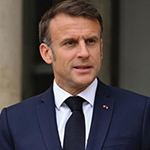 French President Emmanuel Macron took the stage with a story that brought India’s digital transformation into sharp human focus. Opening his keynote with a warm “Namaste,” Macron recalled a Mumbai street vendor who, a decade ago, lacked the documents or address to open a bank account. Today, the same vendor accepts digital payments instantly and at no cost.
“This is not just a tech story,” Macron said. “It is a civilisation story.”
India, he argued, has built digital public infrastructure on a scale unmatched anywhere else. A digital identity system covering 1.4 billion people, a payment platform processing 20 billion transactions every month, and a digital health framework issuing hundreds of millions of IDs collectively represent a transformation of state capacity and citizen access.
Related News.
-

October 2026 A NEW CHAPTER
-

October 2026 “We Can Be A Gateway”
-

October 2026 “Come And See Ecuador”
-

October 2026 Confidence Across Continents
India Empire TV

EDITOR'S DESK, Oct 2026
 The October 2026 issue of India Empire explores a world in which diplomacy, commerce, innovation and human connections increasingly shape one another. Across our stories, a recurring theme emerges: relationships acquire lasting value when goodwill is translated into practical outcomes...
more...
The October 2026 issue of India Empire explores a world in which diplomacy, commerce, innovation and human connections increasingly shape one another. Across our stories, a recurring theme emerges: relationships acquire lasting value when goodwill is translated into practical outcomes...
more...
Ads Spot

Comments.