

The Caribbean
Where History Meets Strategy
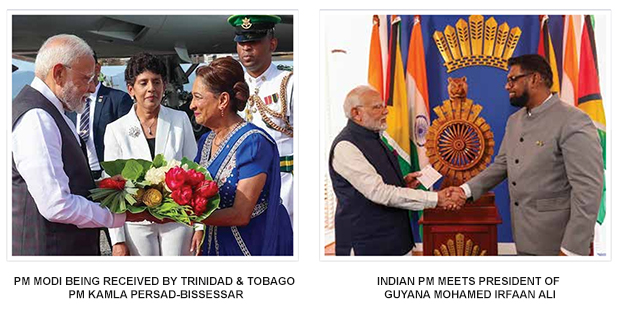
If India’s relationship with Latin America is driven by economics, its relationship with the Caribbean is shaped equally by history and people. In countries such as Trinidad & Tobago, Guyana and Suriname, the story of India is not a distant diplomatic chapter — it is part of the national story. Generations ago, Indians crossed the seas as indentured workers and settled in the Caribbean, and over time their descendants became an integral part of the political, economic and cultural life of these nations. Today, people of Indian origin serve as presidents, prime ministers, ministers, business leaders and professionals across the Caribbean.

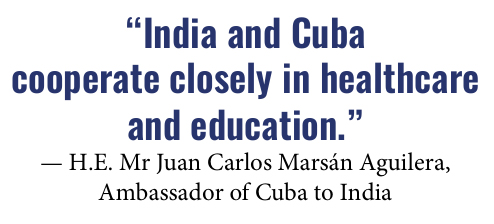
This unique civilisational connection gives India a special place in the Caribbean region, one that goes beyond traditional diplomacy. But in recent years, the relationship has also acquired a strong economic dimension. Guyana and Trinidad & Tobago are important energy partners, particularly with the discovery of significant oil reserves in Guyana and the long-established energy sector in Trinidad. Jamaica has emerged as a services and technology partner, while Cuba has long been a partner in healthcare and education cooperation. Panama, with the Panama Canal, serves as a major logistics and maritime gateway connecting global trade routes.
As Suriname’s President Chan Santokhi noted in an earlier interaction with India Empire, the relationship between India and Suriname is not only diplomatic, but deeply cultural and people-to-people in nature — a sentiment that applies to much of the Caribbean region. The Caribbean therefore represents a unique dimension of India’s engagement with the Latin American and Caribbean region — a partnership built not only on trade and resources, but on history, diaspora, culture and shared development aspirations.
Related News.
-

October 2026 A NEW CHAPTER
-

September 2026 Gorillas Find Names
-

September 2026 India–Kiribati Deepen Cooperation
-

September 2026 India, Ethiopia Deepen Defence Ties


Comments.