

Africa Seeks Scale
African leaders, investors and business executives gathering in Kigali in May called for stronger continental ownership, deeper private-sector collaboration and a more assertive defence of Africa’s economic interests amid intensifying global competition.
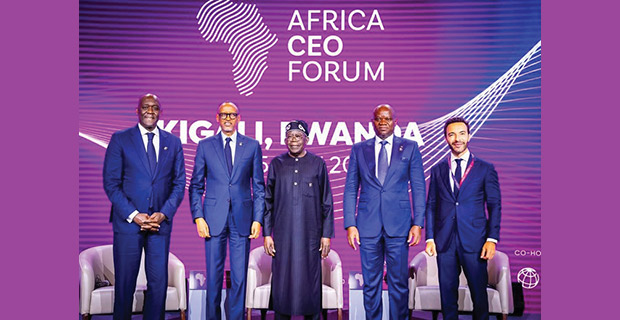
The African continent’s growing struggle for economic sovereignty and scalable growth took centre stage in Kigali in May as political leaders, investors and corporate executives gathered for the Africa CEO Forum 2026, one of the continent’s most influential business and investment gatherings. Held under the theme “Scale or Fail: Why Africa Must Embrace Shared Ownership”, the two-day summit brought together more than 2,000 participants from over 75 countries, reflecting Africa’s increasing importance in global investment and geopolitical calculations.
Organised by Jeune Afrique Media Group and co-hosted by the International Finance Corporation, the forum focused heavily on the challenge of converting Africa’s demographic strength and expanding consumer markets into sustainable and scalable economic transformation. Discussions repeatedly emphasised the need for stronger African ownership structures, regional integration and closer collaboration between governments, businesses and investors to secure long-term prosperity for the continent.
Rwandan President Paul Kagame delivered one of the forum’s strongest political messages, arguing that Africa must take greater responsibility for defending and advancing its own strategic interests despite possessing vast natural and demographic advantages. In sharply worded remarks, Kagame criticised global powers that, in his view, speak about democracy and human rights while simultaneously exploiting African resources and weakening local ownership. His comments reflected a broader mood across many African capitals, where debates around economic sovereignty, fair partnerships and strategic autonomy are becoming increasingly prominent.
Africa CEO Forum President Amir Ben Yahmed stressed that Africa’s future growth would depend on governments and businesses embracing a culture of trust, risk-sharing and transnational African ownership. Rwanda Development Board Chief Executive Officer Jean-Guy Afrika similarly warned that the continent’s demographic expansion alone would not guarantee prosperity unless accompanied by scalable industrial and economic transformation capable of creating jobs and attracting long-term investment.
The Kigali forum once again highlighted Africa’s attempt to reposition itself not merely as a supplier of raw materials or a destination for aid, but as an increasingly integrated economic bloc seeking stronger bargaining power in a rapidly shifting global order. As geopolitical competition intensifies across energy, minerals, logistics and manufacturing supply chains, African policymakers and business leaders are increasingly insisting that the continent must shape its own economic future rather than remain vulnerable to external pressures.
Related News.
-

September 2026 Gorillas Find Names
-

September 2026 India–Kiribati Deepen Cooperation
-

September 2026 India, Ethiopia Deepen Defence Ties
-
September 2026 JAMAICA AT 64,TIES DEEPEN

EDITOR'S DESK, Sep 2026
 Our cover takes us to Volcanoes National Park, where Rwanda recently hosted the 21st Kwita Izina, its annual Gorilla Naming Ceremony. Twenty-two baby mountain gorillas received their names, but the significance of the occasion went far beyond a celebration of wildlife...
more...
Our cover takes us to Volcanoes National Park, where Rwanda recently hosted the 21st Kwita Izina, its annual Gorilla Naming Ceremony. Twenty-two baby mountain gorillas received their names, but the significance of the occasion went far beyond a celebration of wildlife...
more...
Ads Spot

Comments.