

THE EVIAN MESSAGE
At the G7 Outreach Summit in Evian, Prime Minister Narendra Modi carried a familiar message into an increasingly uncertain world: global challenges cannot be solved by a handful of nations alone. Whether the issue is technology, climate action, energy security or economic resilience, the voices of the developing world must be part of the conversation.
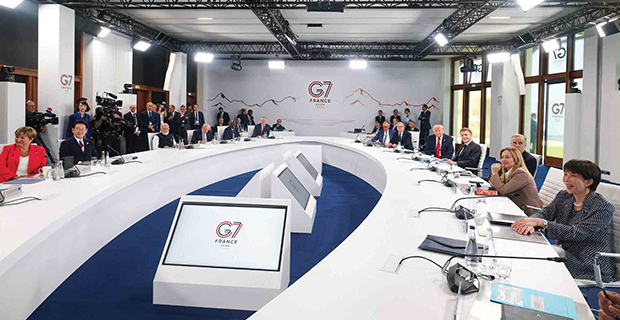
Evian, France: Set against the serene backdrop of Lake Geneva, the G7 Outreach Summit brought together leaders from some of the world’s largest economies at a time when the international system is confronting multiple pressures simultaneously. Trade routes remain vulnerable to geopolitical tensions, conflicts continue to affect energy markets, artificial intelligence is advancing faster than regulatory frameworks can keep pace, and nations everywhere are grappling with the challenge of balancing growth, sustainability and social stability.
For India, participation in the summit was about far more than attendance. It reflected a broader shift in the country’s place within the international order. There was a time when India’s presence at gatherings such as the G7 was seen as recognition of its potential. Today, it is increasingly viewed as recognition of its relevance. As the world’s most populous nation, one of its fastest-growing major economies and an increasingly influential voice of the Global South, India is no longer simply invited to important conversations. It is expected to contribute to them.
That reality was visible throughout the discussions in Evian. Prime Minister Modi emphasised the need for inclusive global governance and reiterated India’s longstanding position that solutions to global challenges must take into account the aspirations and concerns of developing nations. The message resonated because India occupies a unique position in international affairs. It is simultaneously a major economic power, a technology-driven growth story and a country that continues to engage closely with the priorities of the developing world.
The summit also highlighted how dramatically the scope of India’s international engagement has expanded over the past decade. Once viewed largely through the lens of economic reform and market potential, India is now increasingly involved in conversations about digital transformation, supply-chain resilience, artificial intelligence, climate action and emerging technologies. Its experience in building large-scale digital public infrastructure has attracted global attention, while its economic trajectory has made it an important partner for countries seeking stability and growth in an increasingly fragmented world economy.
The discussions in Evian unfolded against a backdrop of profound change. Artificial intelligence is reshaping industries and labour markets. Climate-related challenges are forcing governments to rethink development strategies. Supply chains are being redesigned in response to geopolitical uncertainty. In each of these areas, India brings both scale and experience. Its domestic transformation has created lessons that many countries are eager to understand, while its growing economic influence has made its participation increasingly valuable in global decision-making forums.
Equally significant were the conversations taking place on the margins of the summit. Such engagements rarely generate the headlines associated with plenary sessions, yet they often provide important opportunities for leaders to exchange views and identify areas of cooperation. For India, these interactions form part of a broader diplomatic approach that seeks to maintain strong relationships across regions and political groupings while preserving strategic autonomy. It is a balancing act that has become one of the defining characteristics of Indian foreign policy.
Perhaps the most striking aspect of the summit, however, was the ease with which India occupied its place at the table. There was little sense of a country seeking recognition or validation. Instead, there was the confidence of a nation increasingly comfortable with its role in shaping discussions on some of the most pressing issues facing the international community.
As leaders departed Evian and attention shifted to other engagements in France, one conclusion stood out. India’s growing presence in forums such as the G7 is no longer merely a reflection of economic success or geopolitical weight. It is a recognition that many of the world’s most important conversations increasingly require Indian participation. In an era defined by interdependence and uncertainty, that may well be the most significant message to emerge from the shores of Lake Geneva.
Related News.
-

September 2026 Gorillas Find Names
-

September 2026 India–Kiribati Deepen Cooperation
-

September 2026 India, Ethiopia Deepen Defence Ties
-

September 2026 JAMAICA AT 64,TIES DEEPEN
EDITOR'S DESK, Sep 2026
 Our cover takes us to Volcanoes National Park, where Rwanda recently hosted the 21st Kwita Izina, its annual Gorilla Naming Ceremony. Twenty-two baby mountain gorillas received their names, but the significance of the occasion went far beyond a celebration of wildlife...
more...
Our cover takes us to Volcanoes National Park, where Rwanda recently hosted the 21st Kwita Izina, its annual Gorilla Naming Ceremony. Twenty-two baby mountain gorillas received their names, but the significance of the occasion went far beyond a celebration of wildlife...
more...
Ads Spot

Comments.