

A NEW CHAPTER
As Prime Minister Tarique Rahman settles into office, Delhi and Dhaka have an opportunity to repair a damaged relationship. A proposed visit to India could be an important first step, but the harder work will begin at the negotiating table.
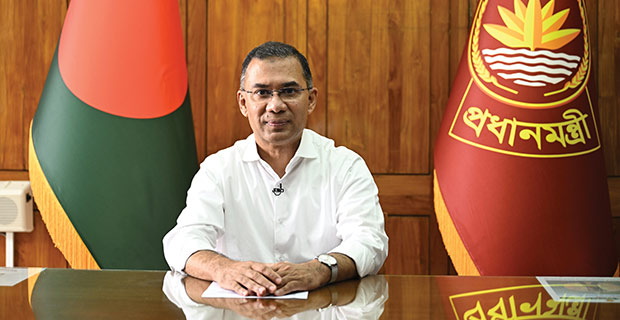
There is a handshake waiting somewhere in Delhi.
It is not yet attached to a confirmed date, an agreed itinerary or a formal announcement. At the time of going to press, India and Bangladesh are discussing a possible visit by Bangladesh Prime Minister Tarique Rahman to New Delhi, with November among the dates being explored. Both sides have indicated, however, that the political conditions must be right. The invitation is open; the visit is not finalised.
That distinction matters. A handshake between the leaders of India and Bangladesh would carry significance beyond the photographs. It would signal whether two neighbours, bound by geography, history, trade and an exceptionally long shared border, can move beyond a period of deep mistrust and begin to rebuild a workable relationship.
Prime Minister Rahman’s arrival at the centre of Bangladeshi politics has created an opening. Whether it becomes a turning point will depend less on ceremony than on what the two governments are prepared to discuss, negotiate and deliver.
A Return From Exile
For nearly 17 years, Prime Minister Rahman lived in London, away from the country whose politics had shaped his life. He returned to Dhaka on December 25, 2025, after the upheaval that brought Sheikh Hasina’s long-serving government to an end in August 2024.
His return was a moment of enormous emotion for the Bangladesh Nationalist Party (BNP), the political organisation founded by his father, former President Ziaur Rahman, and later led by his mother, former Prime Minister Begum Khaleda Zia.
The timing was extraordinary. Prime Minister Rahman came home to a country emerging from political upheaval, with institutions under pressure, an economy confronting serious difficulties and public expectations running high. Just days after his return, Begum Khaleda Zia died. Her funeral brought large crowds into Dhaka and drew senior representatives from several countries.
Prime Minister Rahman’s political inheritance is substantial, but complex. His father was a central figure in Bangladesh’s post-independence history; his mother served as Prime Minister and became one of the country’s most consequential political leaders. Their legacy gave him a powerful base within the BNP, while also placing him under scrutiny over dynastic politics, his own record and the allegations that shadowed his years in opposition.
The years in London offer a glimpse of a more private side of Prime Minister Rahman. During his long exile, he lived with his wife, Dr Zubaida Rahman, and daughter Zaima in Kingston, in south-west London. Away from the daily theatre of Bangladeshi politics, his preferred routines were comparatively quiet: walks through the leafy expanses of Richmond Park and reading history books.
In an interview with TIME, he came across as soft-spoken and introspective, reflecting on the challenges facing his country and the importance of national unity. His years abroad also gave him distance from the political contests that had defined much of his adult life. He has spoken about the ordinary freedoms of life in Britain, including walking without the constant demands of public office.
Returning home brought him back to the political stage, but also into a life governed by security, responsibility and public expectation. The question now is how the perspective acquired during exile will translate into the business of governing Bangladesh.
In February 2026, the BNP won a decisive victory in the parliamentary election held on February 12, and Prime Minister Rahman was sworn in on February 17. His return to power completed one of the most dramatic reversals in Bangladesh’s recent political history. It also placed responsibility squarely on him: the task was no longer only to lead a party that felt excluded from power, but to govern a divided country.
Related News.
-

September 2026 Gorillas Find Names
-

September 2026 India–Kiribati Deepen Cooperation
-

September 2026 India, Ethiopia Deepen Defence Ties
-

September 2026 JAMAICA AT 64,TIES DEEPEN



Comments.