

Partnerships Without Pause
From the Arabian Gulf to Southeast Europe and Southeast Asia, India’s latest diplomatic engagements reveal a foreign policy that is steadily broadening its circle of trusted partners while placing equal emphasis on strategic cooperation, citizen welfare and long-term institutional relationships.
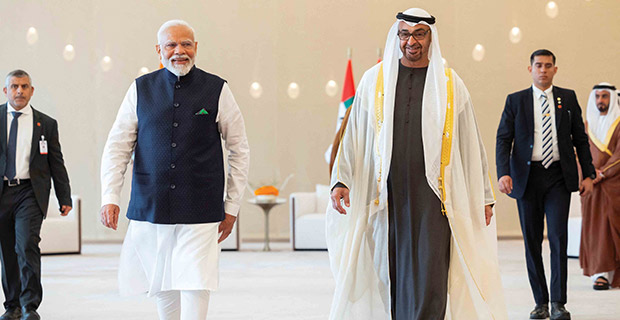
The geography of India’s diplomacy continues to expand, but its underlying philosophy remains remarkably consistent. Whether engaging neighbours across the Indian Ocean, longstanding partners in Europe or emerging strategic collaborators in Southeast Asia, New Delhi’s approach increasingly rests upon a simple yet enduring principle: relationships flourish when they are built simultaneously upon political trust, economic opportunity, technological cooperation and strong human connections. It is this multidimensional approach that has come to define India’s latest engagements with the United Arab Emirates, Thailand and Slovakia, three very different partners united by a common trajectory of steadily deepening cooperation.
Few relationships illustrate that evolution more vividly than India’s partnership with the United Arab Emirates. Once shaped primarily by energy cooperation and the movement of people, the bilateral relationship has, over the past decade, transformed into one of India’s most comprehensive strategic partnerships. The seventh meeting of the India-UAE Joint Committee on Consular Affairs, held in New Delhi, reflected this broader evolution by placing the welfare of citizens at the heart of diplomatic engagement while simultaneously exploring new avenues of technological integration and institutional cooperation.
At first glance, consular affairs may appear to represent the administrative side of diplomacy. In reality, they often touch the lives of ordinary citizens more directly than high-level political agreements. For India and the UAE, home to one of the largest Indian overseas communities in the world, cooperation on labour mobility, legal assistance, document authentication and citizen services has become an indispensable pillar of bilateral relations. The reaffirmation by both governments of their commitment to ensuring the safety, dignity and well-being of each other’s citizens reflected a recognition that people remain the strongest bridge between nations.
One particularly significant initiative discussed during the meeting involved efforts to integrate India’s DigiLocker platform with corresponding digital systems in the UAE. Such a step promises to simplify the authentication of academic qualifications and official documents, benefiting thousands of Indian professionals seeking employment and educational opportunities across the Emirates. It also signals how digital governance is increasingly becoming an instrument of diplomacy, enabling governments to deliver more efficient public services while strengthening confidence between institutions.
The scale of the relationship itself remains extraordinary. More than 4.5 million Indians live and work in the UAE, contributing significantly to the country’s development while serving as an enduring bridge between the two societies. Simultaneously, growing numbers of Emirati citizens continue to visit India for tourism, education and healthcare, reinforcing the reciprocal nature of people-to-people engagement. The Comprehensive Economic Partnership Agreement has further accelerated commercial exchanges, transforming what was once an energy-centred relationship into one encompassing technology, investment, defence, culture and innovation.
Further east, another important chapter is unfolding in India’s engagement with Southeast Asia. Discussions between India’s Ambassador to Thailand, Puneet Agrawal, and senior members of the Thai government reflected the increasing momentum behind the India-Thailand Strategic Partnership, elevated during Prime Minister Narendra Modi’s visit to Bangkok last year. Maritime connectivity, aviation, road links, tourism, trade facilitation and people-to-people exchanges formed the core of a dialogue that recognises geography as an opportunity rather than a constraint.
The conversations extended beyond infrastructure alone. Both sides explored mechanisms to strengthen bilateral trade by addressing tariff and non-tariff barriers while identifying sectors where their economies complement one another. Traditional medicine, public health, investment and regional cooperation also featured prominently, underscoring the increasingly comprehensive character of the relationship. As India’s Act East Policy continues to mature, Thailand occupies a particularly important position, serving as both a gateway to ASEAN and a natural partner in strengthening regional connectivity across the Bay of Bengal and mainland Southeast Asia.
In Europe, meanwhile, India’s engagement with Slovakia continues to gather momentum following Prime Minister Modi’s landmark visit to Bratislava earlier this year. Discussions between Additional Secretary Pooja Kapur and Slovak Ambassador Robert Maxian focused on preparations for future high-level exchanges while reviewing progress across the expanding Comprehensive Partnership. Although Slovakia may not always dominate headlines within India’s European diplomacy, the relationship increasingly reflects New Delhi’s wider effort to cultivate substantive partnerships across the continent based upon mutual political trust and shared strategic interests.
Related News.
-

September 2026 Gorillas Find Names
-

September 2026 India–Kiribati Deepen Cooperation
-

September 2026 India, Ethiopia Deepen Defence Ties
-

September 2026 JAMAICA AT 64,TIES DEEPEN

EDITOR'S DESK, Sep 2026
 Our cover takes us to Volcanoes National Park, where Rwanda recently hosted the 21st Kwita Izina, its annual Gorilla Naming Ceremony. Twenty-two baby mountain gorillas received their names, but the significance of the occasion went far beyond a celebration of wildlife...
more...
Our cover takes us to Volcanoes National Park, where Rwanda recently hosted the 21st Kwita Izina, its annual Gorilla Naming Ceremony. Twenty-two baby mountain gorillas received their names, but the significance of the occasion went far beyond a celebration of wildlife...
more...
Ads Spot

Comments.