

Partnerships Without Pause
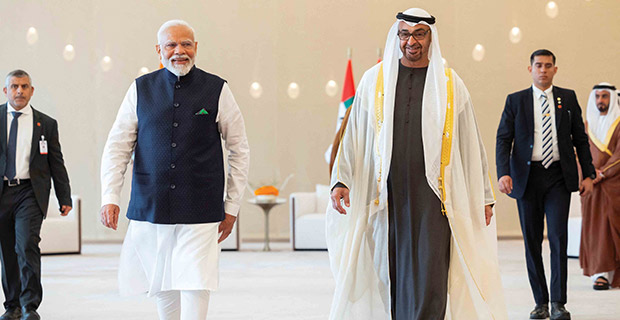
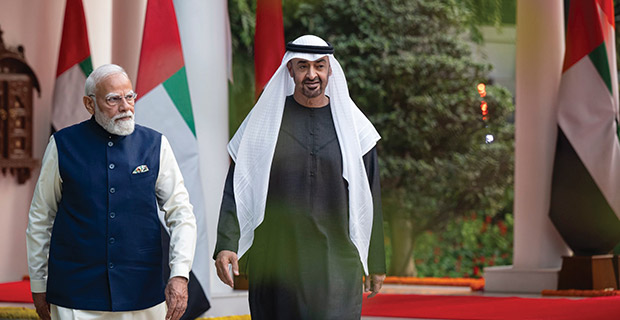
One of the most meaningful expressions of that trust has been Slovakia’s formal support for India’s candidature for a non-permanent seat on the United Nations Security Council, matched by India’s support for Slovakia’s own international aspirations. Such reciprocal endorsements carry significance beyond diplomatic courtesy. They reflect a relationship in which cooperation increasingly extends into multilateral institutions and global governance, areas that have become central to India’s international engagement.
Taken together, these engagements reveal an increasingly sophisticated pattern in Indian diplomacy. Each relationship possesses its own history, priorities and strategic logic. Yet all are characterised by the same broad philosophy: strengthening institutional cooperation, expanding economic opportunity, enhancing technological collaboration and placing citizens at the centre of bilateral engagement. Rather than pursuing isolated diplomatic initiatives, India is steadily weaving together a global network of trusted partnerships capable of supporting its wider aspirations in an increasingly interconnected world.
That evolution is perhaps the defining feature of India’s contemporary foreign policy. Success is no longer measured solely by summit meetings or headline-grabbing announcements. It is equally reflected in digital platforms that simplify citizens’ lives, in academic qualifications recognised across borders, in maritime routes that connect economies, in trade agreements that generate opportunity and in the quiet confidence with which nations continue to invest in one another’s futures.
Across Abu Dhabi, Bangkok and Bratislava, separated by thousands of kilometres and distinct political traditions, one common message emerges with remarkable clarity. India’s diplomacy today is less about expanding influence than about expanding trust. In an era of global uncertainty, that may well prove to be its most enduring strategic asset.
Related News.
-

September 2026 Gorillas Find Names
-

September 2026 India–Kiribati Deepen Cooperation
-

September 2026 India, Ethiopia Deepen Defence Ties
-

September 2026 JAMAICA AT 64,TIES DEEPEN

EDITOR'S DESK, Sep 2026
 Our cover takes us to Volcanoes National Park, where Rwanda recently hosted the 21st Kwita Izina, its annual Gorilla Naming Ceremony. Twenty-two baby mountain gorillas received their names, but the significance of the occasion went far beyond a celebration of wildlife...
more...
Our cover takes us to Volcanoes National Park, where Rwanda recently hosted the 21st Kwita Izina, its annual Gorilla Naming Ceremony. Twenty-two baby mountain gorillas received their names, but the significance of the occasion went far beyond a celebration of wildlife...
more...
Ads Spot

Comments.