

Districts Become Export Engines
India’s Districts as Export Hubs initiative is taking the country’s export ambitions deeper into its districts, turning local strengths into globally marketable products and services.
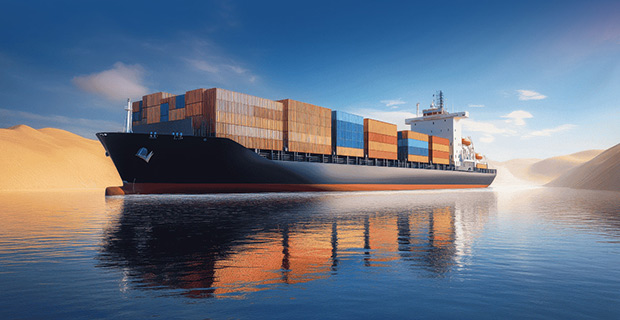
The Centre’s Districts as Export Hubs (DEH) initiative has expanded to cover more than 770 districts across the country, signalling a significant broadening of India’s district-led approach to export promotion. According to a factsheet issued by the Government on September 2, the initiative is gaining greater reach and becoming increasingly integrated with the country’s overall export planning.
The DEH framework seeks to transform districts into centres of export planning by identifying products and services with global potential and creating stronger links between local producers and international markets. Rather than operating as a separate financial scheme, DEH draws upon funding available through various ongoing Central and State Government schemes, building on the One District One Product (ODOP) concept to give district-level economic strengths a global platform.
The strategy is rooted in a simple proposition: India’s next export opportunities need not come only from established industrial centres. By unlocking the strengths embedded within individual districts and connecting them to overseas markets, DEH is designed to generate employment, strengthen Micro, Small and Medium Enterprises (MSMEs), and make India’s export growth more broad-based, inclusive and globally competitive.
Exports have become an increasingly important engine of India’s economic growth. Every rupee earned in overseas markets feeds back into domestic jobs, incomes and industrial activity. India’s total exports of goods and services reached an all-time high of $825.25 billion in 2024-25, rising further to an estimated $863.11 billion in 2025-26.
For decades, however, export activity remained concentrated around a relatively small number of established industrial clusters and port cities. Small towns, rural districts and remote regions often remained largely absent from the country’s export map, despite possessing distinctive products and considerable production capabilities. Bastar’s iron craft, Jalgaon’s bananas and Meghalaya’s Mandarin Oranges are among the examples that illustrate the depth of this untapped district-level potential.
Recognising the opportunity, the Government introduced the ‘Districts as Export Hubs’ Initiative, placing districts at the heart of a more decentralised export strategy. The objective is to enable every district to contribute to India’s export growth by identifying, developing and promoting its own distinctive economic strengths.
At the district level, the District Export Promotion Committees (DEPCs) play a crucial role in translating this vision into actionable strategies. One of their principal responsibilities is to prepare District Export Action Plans (DEAPs), which map products and services with export potential, assess infrastructure and logistics requirements, and identify bottlenecks that may be restricting access to international markets.
The DEAPs also recommend targeted interventions aimed at improving competitiveness and expanding market access. As of March 2026, draft DEAPs had been prepared for 590 districts, of which 249 had been formally adopted by the respective DEPCs, providing a structured foundation for district-specific export strategies.
DEH identifies a wide range of export-worthy products and services across India’s districts, including Geographical Indication (GI)-tagged products, agricultural clusters, toy clusters and engineering goods. District-level mapping allows these capabilities to be matched with the infrastructure, policy support and market opportunities required to take them overseas.
Among the products identified for their export potential are ceramics and tiles, potatoes from Gujarat’s Sabarkantha district, bamboo craft and cashew from Jharkhand’s Jamtara district. Such mapping is gradually turning the export map of India into something far more expansive: one in which the country’s smallest districts can become gateways to the world’s markets.
Related News.
-

September 2026 Beyond Four Walls
-

September 2026 Tewolde Takes Charge
-

September 2026 Minerals Drive Engagement
-

September 2026 APEDA Opens Global Doors
India Empire TV


EDITOR'S DESK, Oct 2026
 The October 2026 issue of India Empire explores a world in which diplomacy, commerce, innovation and human connections increasingly shape one another. Across our stories, a recurring theme emerges: relationships acquire lasting value when goodwill is translated into practical outcomes...
more...
The October 2026 issue of India Empire explores a world in which diplomacy, commerce, innovation and human connections increasingly shape one another. Across our stories, a recurring theme emerges: relationships acquire lasting value when goodwill is translated into practical outcomes...
more...
Ads Spot

Comments.