

Editor-in-Chief’s Letter
There are moments when a story on a magazine cover does more than capture attention. It opens a window into a larger conversation. This month, Rwanda’s remarkable conservation story does precisely that.
Our cover takes us to Volcanoes National Park, where Rwanda recently hosted the 21st Kwita Izina, its annual Gorilla Naming Ceremony. Twenty-two baby mountain gorillas received their names, but the significance of the occasion went far beyond a celebration of wildlife. Rwanda’s journey from a population of around 250 mountain gorillas in the Virunga Massif in the early 1980s to more than 1,000 today is a story of persistence, institutions, community participation and international partnership. It is also a story about the idea that conservation and human development cannot be separated. That is a message with resonance well beyond Rwanda.
For India Empire, the choice of Rwanda as our cover is therefore not simply an Africa story. It reflects our continuing belief that Africa deserves to be understood through the depth and diversity of its partnerships with India and with the wider world. In this issue, we look beyond the spectacle of Kwita Izina to the changing architecture of India-Africa relations. Our coverage of South Africa examines cooperation in critical minerals, pharmaceuticals and manufacturing, while our Ethiopia story looks at the expanding defence relationship, including training, defence industry collaboration and UN Peacekeeping. Together, these stories point towards an Africa that is increasingly central to questions of trade, technology, energy, security, healthcare and sustainable growth.
This wider lens is important because India’s international engagement can no longer be understood through isolated regional compartments. From Africa and the Indian Ocean to Europe, the Indo-Pacific, Central Asia, the Gulf and North America, relationships are becoming interconnected. Trade discussions increasingly involve technology and supply chains. Defence partnerships are linked to manufacturing. Development cooperation encompasses healthcare, education, infrastructure and capacity building. And increasingly, the Indian diaspora is part of this architecture.
That is why diaspora remains one of the defining threads of India Empire. In this issue, President Droupadi Murmu’s engagement with the Indian community in Romania reminds us of the enduring role of overseas Indians as bridges between India and their countries of residence. Elsewhere, our profile of Dr Syed Anwar Khursheed takes us from Gulbarga to Saudi Arabia, tracing more than four decades of medicine, community service and institution-building. His journey demonstrates how the diaspora can carry not only memory and identity across borders, but also knowledge, compassion and public purpose.
The same idea appears in our coverage of the Indian American community, where scientific achievement, defence technology, investment, agriculture and innovation intersect. Major Jagatkumar Patel’s pioneering work in minimally invasive brain surgery is one example of how Indian-origin talent contributes to global progress. Our coverage of India’s engagement with the United States similarly shows how diaspora, technology and economic opportunity increasingly overlap.
There is another thread running through these pages: India’s own transformation. Our reports on Districts as Export Hubs, India’s expanding trade engagement, public-sector accountability, defence cooperation and emerging technology illustrate a country seeking to connect local capability with global opportunity. The world is not simply looking at India; India is increasingly shaping the terms of its engagement with the world.
This, ultimately, is what we seek to do with India Empire. We are interested in the places where India meets the world, and where the world’s developments acquire meaning for India and its diaspora. Diplomacy, business, science, culture, communities and ideas rarely travel in straight lines. They cross borders, overlap and create new possibilities.
As you turn these pages, I hope you will see the September issue not as a collection of disconnected stories, but as a map of relationships in motion. Rwanda is our starting point, Africa is an important part of the journey, and the wider world is the landscape.
India Empire continues to follow that journey with curiosity, context and a distinctly Indian perspective.
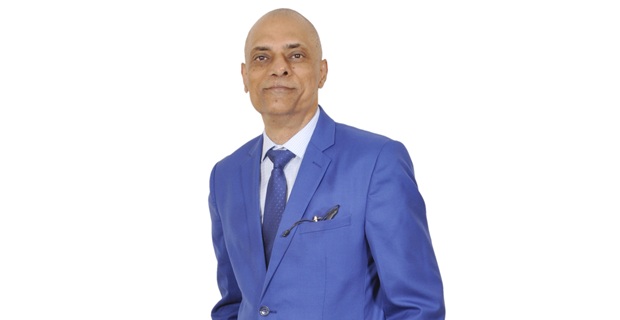
Sayantan Chakravarty
sayantanc@gmail.com
Related News.
-

October 2026 Editor-in-Chief’s Letter
-

August 2026 Editor-in-Chief’s Letter
-

July 2026 Editor-in-Chief’s Letter
-

June 2026 Editor-in-Chief’s Letter
India Empire TV


EDITOR'S DESK, Oct 2026
 The October 2026 issue of India Empire explores a world in which diplomacy, commerce, innovation and human connections increasingly shape one another. Across our stories, a recurring theme emerges: relationships acquire lasting value when goodwill is translated into practical outcomes...
more...
The October 2026 issue of India Empire explores a world in which diplomacy, commerce, innovation and human connections increasingly shape one another. Across our stories, a recurring theme emerges: relationships acquire lasting value when goodwill is translated into practical outcomes...
more...
Ads Spot

Comments.