

A DECLARATION DESPITE DIVIDES
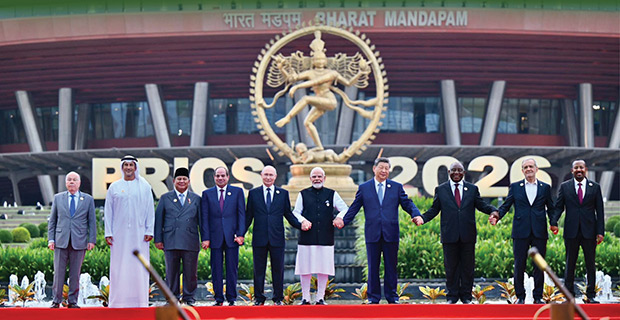
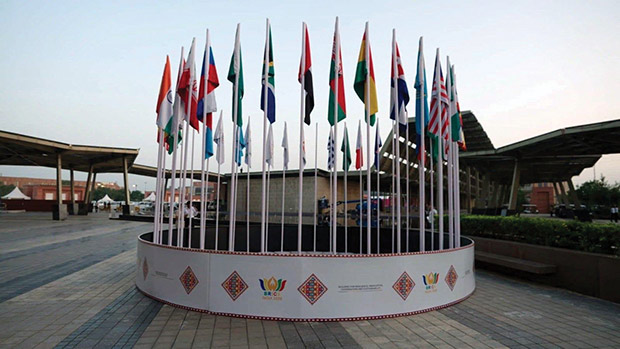
The competing perspectives of India and China within BRICS also featured in the analysis of the summit. Shidore said Beijing views BRICS as a platform capable of counterbalancing Washington and supporting its implicit claim to leadership of the Global South. India, by contrast, would like BRICS to complement existing US-led institutions rather than directly challenge them.
The distinction reflects different approaches to the role BRICS could play in global affairs. For India, the grouping can provide a vehicle for developing countries to secure greater representation and influence while remaining connected to the broader international institutional system. China’s approach, as characterised by Shidore, places greater emphasis on BRICS as a counterweight to the United States and an instrument of influence in the Global South.
Yet the rivalry between the two major Asian powers did not prevent cooperation within the grouping. Shidore noted that India and China had competed for leadership of the Global South, but said their competitive elements had not been allowed to overwhelm their constructive engagement with BRICS.
The New Delhi summit thus unfolded against several overlapping pressures: an expanded membership, disagreements over major conflicts, continuing trade tensions and a wider debate over the structure of global economic governance. India’s task as chair was to bring these divergent interests into a document that could command the agreement of all members.
The resulting declaration did not eliminate the differences within BRICS. Rather, the process demonstrated an approach based on identifying formulations that members could accept while preserving their individual positions on contentious geopolitical questions. The language on the Middle East conflict, as cited by Shidore, illustrated this method by expressing concern and urging restraint without assigning responsibility.
At the same time, India’s chairmanship placed issues of practical cooperation alongside questions of geopolitics. Digital public infrastructure, technology, trade and reform of global financial arrangements provided an agenda focused on economic development and the interests of emerging and developing economies. The emphasis also complemented India’s wider argument that developing nations should have a greater stake in international rule-making.
For BRICS, the New Delhi summit therefore presented a test of whether an increasingly diverse membership could maintain a measure of cohesion without requiring uniformity on every international dispute. The adoption of a joint declaration indicated that agreement remained possible, even where members held sharply different positions on contentious issues.
Related News.
-

October 2026 A NEW CHAPTER
-

October 2026 “We Can Be A Gateway”
-

October 2026 “Come And See Ecuador”
-
October 2026 Confidence Across Continents
India Empire TV


EDITOR'S DESK, Oct 2026
 The October 2026 issue of India Empire explores a world in which diplomacy, commerce, innovation and human connections increasingly shape one another. Across our stories, a recurring theme emerges: relationships acquire lasting value when goodwill is translated into practical outcomes...
more...
Ads Spot

Comments.