

Building India Smarter
Infrastructure and Real Estate as the Foundation of Growth
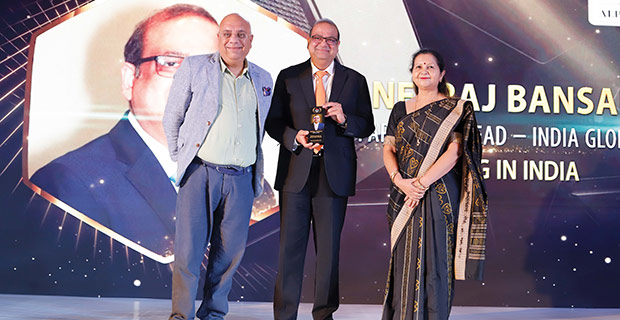
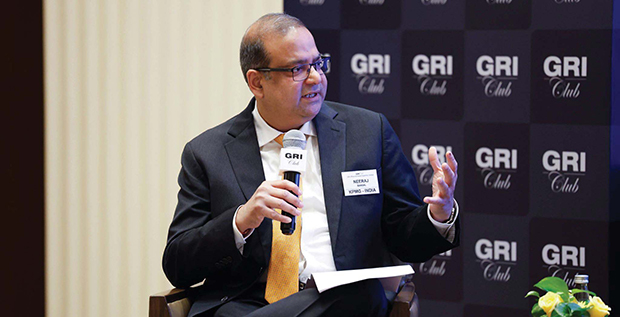
Infrastructure and real estate have been central to Bansal’s professional journey. A defining phase came during his tenure as National Leader for KPMG India’s Building, Construction and Real Estate (BCRE) sector between 2013 and 2019. He was also a member of the KPMG Global BCRE Steering Board—a period when India’s infrastructure ambitions began to scale rapidly, even as execution challenges became more visible.
During this time, he worked closely with developers, promoters, EPC players, and infrastructure investors in India, the Middle East, and ASPAC regions on project viability, governance frameworks, operating models, and capital efficiency. His work in real estate and infrastructure has covered project monitoring, process re-engineering, organisation transformation, office-of-the-chairman support, and turnaround strategies for large project developments. Further, Bansal has been closely associated with India’s evolving infrastructure ecosystem across transport, power, oil and gas, urban development, manufacturing, and logistics, helping clients navigate scale, complexity, and regulatory change.
This experience has shaped a broader view of the sector’s role in India’s growth. “The built environment today carries a larger responsibility. It is not just about meeting demand for infrastructure and housing but about shaping inclusive and future-ready communities,” he says.
He has also contributed to national policy conversations, having been part of a Union Government-appointed think tank examining project time and cost overruns, and authoring one of India’s earliest publications on infrastructure project management with MOSPI in 2010. In 2014, he also authored a widely cited study on financing affordable housing to fulfil India’s growing needs—Funding the Vision ‘Housing for All by 2022’—which received wide coverage across national and international media.
With India’s infrastructure market projected to reach new heights, Bansal sees industrialised construction as less about technology adoption and more about institutional maturity, bringing predictability and discipline into an ecosystem historically marked by fragmentation.
Related News.
-
September 2026 Gorillas Find Names
-

September 2026 India–Kiribati Deepen Cooperation
-

September 2026 India, Ethiopia Deepen Defence Ties
-

September 2026 JAMAICA AT 64,TIES DEEPEN

EDITOR'S DESK, Sep 2026
 Our cover takes us to Volcanoes National Park, where Rwanda recently hosted the 21st Kwita Izina, its annual Gorilla Naming Ceremony. Twenty-two baby mountain gorillas received their names, but the significance of the occasion went far beyond a celebration of wildlife...
more...
Our cover takes us to Volcanoes National Park, where Rwanda recently hosted the 21st Kwita Izina, its annual Gorilla Naming Ceremony. Twenty-two baby mountain gorillas received their names, but the significance of the occasion went far beyond a celebration of wildlife...
more...
Ads Spot

Comments.