

Building India Smarter
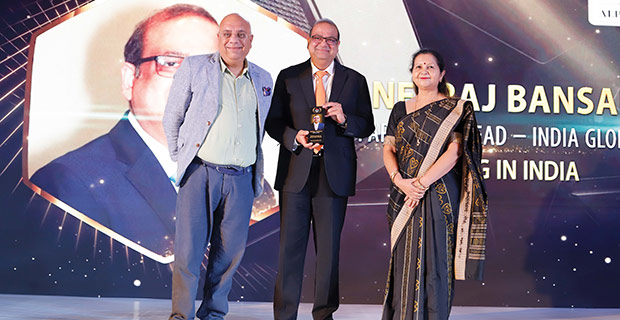

Supply Chains, Trade, and the New Geography of Growth
Alongside infrastructure and real estate, supply chain transformation and international trade form a second core pillar of Bansal’s work.
Over the years, he has led engagements focused on procurement transformation, vendor ecosystem design, warehousing and logistics optimisation, and ERP-led supply chain implementations across sectors, including FMCG, pharmaceuticals, engineering, EPC, textiles, and manufacturing. His work often sits at the intersection of operational execution and trade policy, helping organisations recalibrate sourcing strategies amid shifting geopolitical and regulatory environments.
What distinguishes this phase of his work is a growing emphasis on resilience.
“Supply chains today are strategic assets,” Bansal notes. “They determine competitiveness, resilience, and speed to market. India’s opportunity lies in combining global integration with domestic manufacturing depth. When supply chains are managed well, their impact goes far beyond efficiency. They strengthen competitiveness, improve reliability, and quietly add momentum to economic growth, often contributing several percentage points to GDP over time.”
His perspectives on supply chains are shaped by context and observation. He recalls how India’s early inward-looking years limited choice and efficiency, and how liberalisation was not an ideological leap but a practical realisation that progress depends on openness, learning, and collaboration.
Today, as companies rethink concentration risk and governments re-evaluate trade dependencies, Bansal’s advisory lens increasingly bridges customs frameworks, trade facilitation, and on-ground execution—translating policy shifts into operational reality.
Related News.
-

September 2026 Gorillas Find Names
-

September 2026 India–Kiribati Deepen Cooperation
-

September 2026 India, Ethiopia Deepen Defence Ties
-

September 2026 JAMAICA AT 64,TIES DEEPEN

EDITOR'S DESK, Sep 2026
 Our cover takes us to Volcanoes National Park, where Rwanda recently hosted the 21st Kwita Izina, its annual Gorilla Naming Ceremony. Twenty-two baby mountain gorillas received their names, but the significance of the occasion went far beyond a celebration of wildlife...
more...
Our cover takes us to Volcanoes National Park, where Rwanda recently hosted the 21st Kwita Izina, its annual Gorilla Naming Ceremony. Twenty-two baby mountain gorillas received their names, but the significance of the occasion went far beyond a celebration of wildlife...
more...
Ads Spot


Comments.