

CROSSING SEAS, MERGING FAITHS
The perilous ocean crossings of Indian indentured labourers to the French West Indies reshaped belief systems, dissolving old boundaries and giving birth to a syncretic Indo-Creole Hinduism.
India is profoundly shaped by religion, which forms the foundational matrix of its social and cultural organisation. Whether Hindu, Muslim, Christian, Jain, Zoroastrian, or Jewish, religion structures communal belonging, regulates daily life through ritual calendars, and governs both individual conduct and collective trajectories. Dietary rules, marriage practices, dress codes, and professional norms are all embedded within religious prescriptions, creating a comprehensive moral and social order.
This religious centrality is further intensified by India’s immense linguistic and regional diversity. From North to South and East to West, devotional practices vary widely. The Hindu traditions of Tamil Nadu differ markedly from those of Bengal, just as Sufi Islam in Gujarat carries distinct characteristics from its Tamil counterpart. Together, these religious and linguistic variations form a vast cultural mosaic.
The Kala Pani
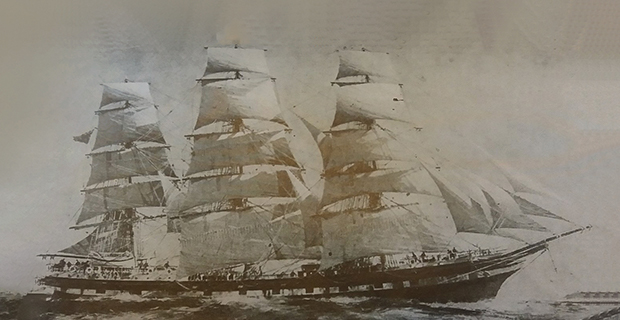
In 1853, the vessel Aurélie departed for the French West Indies carrying the first Indian indentured labourers bound for plantations in Martinique and Guadeloupe. Recruited largely from rural Tamil Nadu, with smaller numbers from Pondicherry, Karaikal, and Bengal, the migrants were predominantly Hindu, though Muslims and a few Christians were also among them.
Their departure entailed a grave religious transgression. The crossing of the sea violated the Kala Pani, the “curse of the black waters”, a deeply entrenched belief that ocean voyages caused irreversible ritual pollution, severing individuals from the sacred geography of the Ganges and disrupting the cycle of reincarnation. Yet famine, food scarcity, and political instability made survival at home increasingly untenable. Economic desperation compelled hundreds to transgress this ancestral taboo.
While Kala Pani is most commonly associated with North Indian upper-caste Hinduism, scholars such as Singaravélou note its presence in Tamil culture as well. Local magistrates even invoked it to discourage emigration. Still, the migrants boarded the ships, aware that return might mean social ostracism, costly purification rituals, or even permanent banishment from their villages.
Related News.
-

October 2026 Seva Pakhwada Reaches Rwanda
-

October 2026 Diaspora Seeks Stronger Voice
-

September 2026 Healing Beyond Borders
-

September 2026 MARRIAGE BEYOND BORDERS CROSS-BORDER JUSTICE
India Empire TV


EDITOR'S DESK, Oct 2026
 The October 2026 issue of India Empire explores a world in which diplomacy, commerce, innovation and human connections increasingly shape one another. Across our stories, a recurring theme emerges: relationships acquire lasting value when goodwill is translated into practical outcomes...
more...
The October 2026 issue of India Empire explores a world in which diplomacy, commerce, innovation and human connections increasingly shape one another. Across our stories, a recurring theme emerges: relationships acquire lasting value when goodwill is translated into practical outcomes...
more...
Ads Spot

Comments.