

Cultivating Beyond Scale
Where Biotechnology Enters
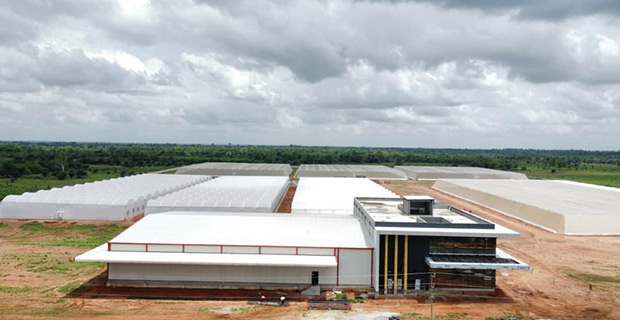
The most striking expression of that ambition may not be the pineapple fields at all. It is the tissue-culture laboratory. Developed with an investment of approximately CFA 7 billion, the facility has an initial capacity to produce 13.5 million disease-free plants annually, with plans to expand beyond 20 million plants a year. It is designed to produce high-quality planting material for pineapple, banana and other horticultural crops, improving uniformity, disease resistance and yields.
The significance is both technological and economic. Poor-quality planting material can quietly undermine productivity across an agricultural economy. Healthier and more consistent planting stock can improve yields, strengthen value chains and increase profitability.
The facility also changes the character of the enterprise. Agriculture here is no longer simply about putting more land under cultivation. It is about controlling the quality of what goes into the soil before the crop ever reaches the field.
The integrated farming, biotechnology and processing ecosystem is expected to generate employment for more than 1,500 workers, alongside opportunities for more than 200 highly skilled technical and scientific professionals. Beyond employment, it is intended to support knowledge transfer and capacity building, helping develop a new generation of African agricultural expertise.
The project also forms part of a broader agricultural transformation initiative supported through World Bank financing and implemented in partnership with the Government of Benin, giving the enterprise a significance beyond the boundaries of a single commercial venture. The stated objective is to strengthen agricultural competitiveness, modernise production systems and create sustainable employment opportunities.
A National Ambition
Pulavarti’s journey has also unfolded alongside policymakers who saw agriculture as a strategic pillar of Benin’s future.
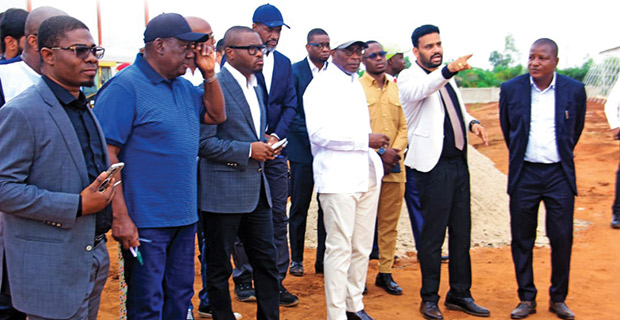
During visits to the GDIZ project site, President Patrice Talon, then Minister of Economy and Finance Romuald Wadagni, and Agriculture Minister Gaston Dossouhoui reviewed progress on the agricultural development programme. Their involvement placed the project within the wider national agenda of agricultural modernisation, industrialisation and value addition.
The significance of that relationship is worth noting. The story is not simply about an Indian entrepreneur finding an opportunity in Africa. It is about what can happen when entrepreneurial capital encounters a government determined to create the infrastructure and policy environment for transformation.
The broader vision associated with the project is therefore larger than pineapple production. It is about creating an agricultural ecosystem in which science, investment, processing, employment and market access reinforce one another. The changes sought within GDIZ echo Benin’s larger ambition to move from exporting raw commodities towards retaining more value at home.
Related News.
-

September 2026 Healing Beyond Borders
-

September 2026 MARRIAGE BEYOND BORDERS CROSS-BORDER JUSTICE
-

September 2026 Diaspora, Defence And Growth
-

September 2026 President in Romania



Comments.