

Editor-in-Chief’s Letter
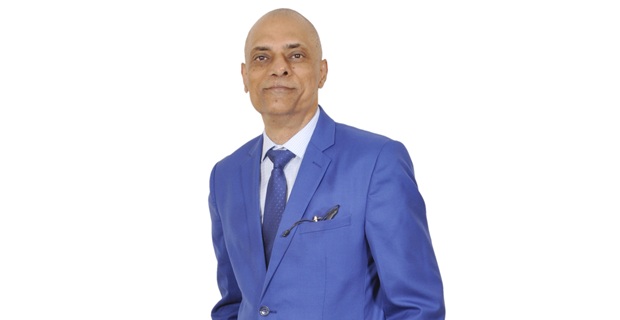
Dear Readers,
The October 2026 issue of India Empire explores a world in which diplomacy, commerce, innovation and human connections increasingly shape one another. Across our stories, a recurring theme emerges: relationships acquire lasting value when goodwill is translated into practical outcomes.
Our cover story, “A New Chapter,” examines the opportunity to repair India–Bangladesh relations under Prime Minister Tarique Rahman. After nearly 17 years in London, his return to Dhaka and subsequent rise to office have opened a new phase in Bangladesh’s political life. For New Delhi and Dhaka, this presents an opportunity to move beyond a period of mistrust and rebuild a workable relationship between two neighbours bound by geography, history, trade and a long shared border. A proposed visit to India could provide an important opening, but the more demanding work will begin at the negotiating table. Teesta water-sharing, border security, trade, connectivity and the question of Sheikh Hasina’s presence in India remain difficult issues. The challenge is to turn diplomatic engagement into sustained dialogue, reciprocal understanding and agreements that deliver tangible benefits to both countries.
“Confidence Across Continents” examines the wider pattern of India’s diplomatic engagement, from Europe and Central Asia to Southeast Asia, the Gulf, the Pacific and the Indian Ocean. It highlights a foreign policy built on continuity, institutional cooperation and patient relationship-building. Our accompanying coverage of India’s engagement with Bhutan, Thailand, Slovenia and Italy demonstrates how these partnerships span energy, connectivity, trade, technology, education and cultural exchange.
Trade is another prominent theme. New Zealand’s parliamentary approval of legislation to implement the India-New Zealand Free Trade Agreement brings the pact closer to taking effect, opening opportunities for Indian exporters and creating avenues for cooperation in services and investment. India–Thailand discussions similarly underline the importance of addressing trade barriers, improving market access and identifying complementary strengths across industries.
The 18th BRICS Summit in New Delhi offers a perspective on the challenges of multilateral diplomacy. With members holding different strategic priorities and international positions, reaching a joint declaration requires accommodating competing interests. The summit illustrates the continuing importance of dialogue and consensus in a changing global order.
Our coverage also looks at parliamentary engagement in Cape Town, where representatives from India, South Africa and Trinidad and Tobago discussed cooperation between their legislatures. Such exchanges remind us that international relationships extend beyond governments to the institutions that sustain dialogue and people-to-people connections.
Leadership and scientific progress provide further insights. In Seattle, India’s Ambassador to the United States, H.E. Vinay Kwatra, recalled a lesson about discipline and character that shaped his understanding of leadership. Elsewhere, Indian American Army neurosurgeon Major Jagatkumar Patel’s pioneering minimally invasive technique for removing certain brain tumours through the nose demonstrates how medical innovation can reduce surgical trauma and improve patients’ prospects. Both stories, in very different ways, show the importance of knowledge put to practical use.
Our interviews with H.E. Dharamkumar Seeraj, Guyana’s High Commissioner to India, and H.E. Fernando Bucheli, Ambassador of Ecuador to India, explore two relationships with considerable scope for growth. Guyana’s shared history of Indian indentured migration provides a foundation for cooperation in energy, agriculture, infrastructure, healthcare and trade. Ecuador, meanwhile, is seeking wider economic engagement with India through a prospective trade agreement, investment, pharmaceuticals, digital technology and renewable energy. Both conversations underline the opportunity to turn diplomatic goodwill into partnerships that connect businesses and people across continents.
Taken together, these stories reflect the breadth of India Empire: diplomacy with substance, commerce with purpose, leadership grounded in values and innovation that serves humanity. They also reinforce our belief that understanding international affairs requires looking beyond individual events to the relationships, institutions and ideas shaping what comes next.
I invite you to explore this edition and share your reflections with us. Thank you for your continued readership and for being part of the conversation that connects India with the wider world.
Sayantan Chakravarty
sayantanc@gmail.com
Related News.
-

September 2026 Editor-in-Chief’s Letter
-

August 2026 Editor-in-Chief’s Letter
-

July 2026 Editor-in-Chief’s Letter
-

June 2026 Editor-in-Chief’s Letter

EDITOR'S DESK, Oct 2026
 The October 2026 issue of India Empire explores a world in which diplomacy, commerce, innovation and human connections increasingly shape one another. Across our stories, a recurring theme emerges: relationships acquire lasting value when goodwill is translated into practical outcomes...
more...
Ads Spot

Comments.