

“We Can Be A Gateway”
India’s digital public infrastructure is attracting global interest. What could Guyana adopt?
UPI is a phenomenal platform. It is simply remarkable how it operates. Plans to have a unified payment platform similar to UPI in Guyana are already far advanced, using Indian technology and Indian human-resource expertise.
We are learning from the experiences of other countries and hopefully will be able to avoid some of the negatives in our development because we have learned from countries that are ahead of us in establishing and expanding digital platforms.
Indian Arrival Day carries both historical and painful memories. How is that history remembered in Guyana?
It is a holiday in Guyana. We call it Arrival Day because we also have to take into consideration the other people who arrived in Guyana.
We celebrate it on the day Indians arrived, when they landed at Highbury on the Berbice River. This year, on 5 May, I was at Highbury, where the Whitby touched down almost 200 years ago.
Every year there is a celebration. There is also a monument dedicated to Indian arrival which was donated by India.
There are cultural programmes, television coverage and newspaper reports. We talk about the arrival of Indians into Guyana, the circumstances in which they were brought there and the situation they had to endure.
They were promised a lot of good things, but when they arrived it was a different story. It was not dissimilar to slavery, although the Indians were not property.
What would a Kolkata memorial commemorating the departure of indentured Indians mean to Guyana?
It is of immense importance to me, both as High Commissioner of Guyana and personally. I visited the site in Calcutta last year.
Suriname has a monument there, and it sparked an interest in me that Guyana would also be interested in establishing a monument to commemorate the departure of our own ancestors from Calcutta on that long journey to Guyana.
I would be happy to take this forward and see how the Government of Guyana can cooperate with the Government of India, particularly the Minister of Culture, to push this forward.
Cricket and popular culture have also kept the connection alive.
Of course. We have had Indian-origin captains from Guyana, as well as other Guyanese captains of the West Indies, such as Clive Lloyd and Roger Harper.
We also had four Guyanese players feature in the last IPL. Bollywood is very popular. Shah Rukh Khan is popular in Guyana, while in my generation Amitabh Bachchan, Shashi Kapoor, Rishi Kapoor and Dharmendra were very well known.
Indian music and culture have a tremendous impact on our entertainment environment. Everyone enjoys good Indian music and good Indian songs.
Is Indian culture being lost among younger generations, or is something else happening?
I would disagree with your first comment. What you said may have been applicable a decade ago. Now the opposite is happening.
Because the economy is doing better, people have more disposable income and are able to look beyond basic necessities. They are asking: Who am I? Where do I come from? What were my ancestors like? What is my culture?
There is a reversal. Instead of losing, we are now gaining. The promotion of culture, yoga, religious awareness and the New India Programme is making an investment in young people.
You are seeing a resurgence of dance classes, music classes and language. My own children, when they were young, used to listen to English music while I played Indian music. Now they listen to more Indian music than I do.
More and more Guyanese are also coming to India for medical treatment and tourism. When they go back, they return with a sense of what is taking place here.
You served in Parliament for 17 years before becoming High Commissioner. How did that journey begin?
I am from a small rural village and have an agricultural background. I worked primarily in the rice sector and became General Secretary of the Guyana Rice Producers Association.
I entered politics based on my agricultural background and constituents and served in Parliament for 17 years. The President thought I would be a good High Commissioner here in India. I was not too convinced, but he said, “No, you go. I want you to go there.”
I was Chairman of the National Drainage and Irrigation Authority and Vice Chairman of Guyana Water Incorporated. I was responsible for the country’s drainage and irrigation system and also served on the board of a financial institution.
So my exposure to the diplomatic world is not exactly new. It is just that I am now doing it as a diplomat.
Finally, how significant was Prime Minister Narendra Modi’s historic 2024 visit to Guyana?
It was a big day for Guyana and signalled what was happening, essentially an expansion of cooperation between the two countries.
The Prime Minister’s visit sent the right signals that Guyana is the next destination. We are going to increase our economic partnership and our trade, and our bilateral relations in all aspects are going to get better and better.
People notice when a head of government visits a country. They pick up on that kind of signal. I think that was the intention of the Prime Minister when he visited my country in 2024.
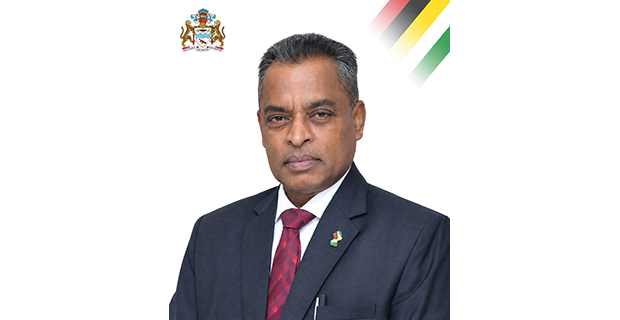
Thank you, Excellency, for this wonderful interview. I look forward to more engagements with you in the coming months.
Thank you to India Empire for having me. I look forward to further engagement and always welcome the opportunity to interact with members of the media so that the message of my country can reach a broader audience.
Related News.
-

October 2026 A NEW CHAPTER
-

October 2026 “Come And See Ecuador”
-

October 2026 Confidence Across Continents
-
October 2026 THIMPHU TALKS COOPERATION

Comments.