

Confidence Across Continents
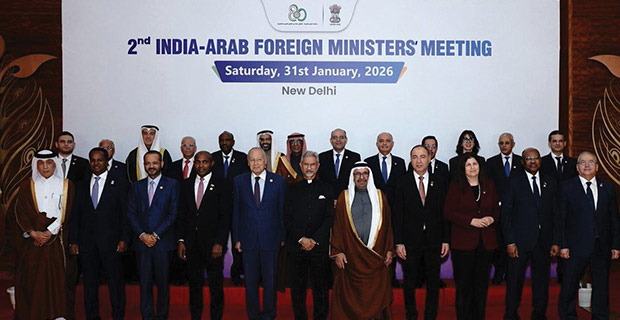
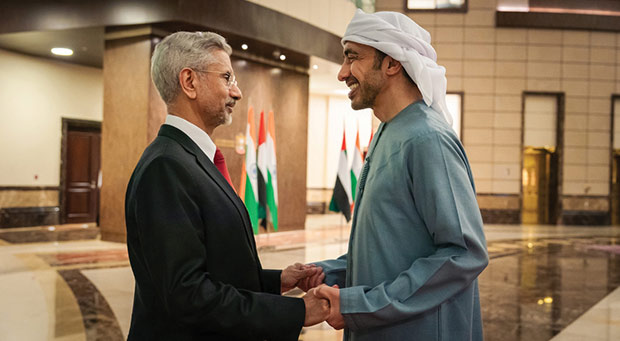
Another defining feature of India’s contemporary foreign policy is its growing institutional maturity. Increasing emphasis is now placed upon structured roadmaps, strategic partnerships, digital governance mechanisms, academic collaboration, ministerial dialogues and regular review processes. Such frameworks ensure that bilateral relationships continue to advance irrespective of changes in governments or the international political climate. Diplomacy, in this sense, has become less event-driven and more institution-driven.
The same philosophy extends to India’s engagement with the Global South. Relationships such as those with Mauritius demonstrate that development cooperation is increasingly conceived as a partnership among equals rather than a donor-recipient arrangement. Investments in healthcare, education, transport infrastructure and maritime security are presented not simply as developmental assistance but as shared investments in regional stability and collective prosperity. This approach has enhanced India’s credibility among developing nations seeking partnerships founded upon mutual respect and practical outcomes.
Technology, too, has assumed an increasingly central diplomatic role. Whether through semiconductor cooperation with European partners, artificial intelligence collaborations in North America, digital document authentication with the UAE or innovation partnerships across the Indo-Pacific, India’s international engagement is steadily adapting to the realities of a knowledge-driven global economy. The diplomacy of the future, it increasingly appears, will be shaped as much by laboratories and digital platforms as by conference halls and treaty rooms.
Perhaps the most noteworthy lesson emerging from these engagements is one of temperament. India’s foreign policy today projects confidence without triumphalism, ambition without confrontation and strategic purpose without ideological rigidity. It seeks partnerships rather than blocs, dialogue rather than division and long-term engagement rather than transactional diplomacy. Such an approach has enabled India to cultivate productive relationships across political systems, regions and strategic groupings that often hold divergent perspectives on global affairs.
As international politics enters an era marked by technological disruption, geopolitical competition and economic realignment, this patient, multidimensional diplomacy may prove to be one of India’s greatest strengths. Nations increasingly seek reliable partners capable of offering continuity amid uncertainty. India’s expanding network of relationships suggests that many already see it in precisely that light.
From the shores of the Indian Ocean to the cities of Europe, from the Pacific coastline of California to the steppes of Central Asia, India’s diplomatic footprint continues to widen. Yet the essence of its engagement remains remarkably consistent: building trust patiently, strengthening institutions steadily and creating partnerships designed not merely to respond to the present, but to shape the future. That quiet confidence, more than any single summit or agreement, is becoming the defining signature of India’s place in the world.
Related News.
-

October 2026 A NEW CHAPTER
-

October 2026 “We Can Be A Gateway”
-

October 2026 “Come And See Ecuador”
-

October 2026 THIMPHU TALKS COOPERATION


Comments.