

Caribbean Indian Mosaic
Life Across the Islands
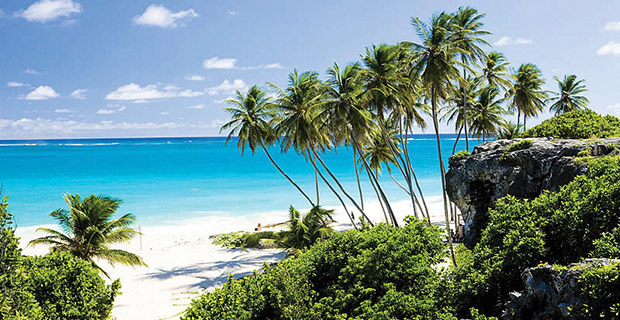
In Jamaica and Barbados, Indian-origin populations integrated into broader society, often intermarrying and adopting local idioms, yet retained traces of identity through Hindu and Muslim rituals, culinary traditions, and family memory. Barbados, in particular, illustrates this subtle continuity. Though numerically small, its Indian community carries symbolic weight and has intersected with diplomatic engagement in recent years.
In Grenada, St Kitts & Nevis, St Vincent & the Grenadines, Antigua & Barbuda, and Dominica, Indian-origin communities never formed large blocs, yet their influence was woven into everyday life. Over time, Indian-origin traders, educators, medical professionals, and small-business owners became familiar figures in island economies—respected locally, deeply rooted, and often serving as informal bridges between communities. Their legacy is not one of political prominence, but of steady contribution, affirming that diaspora influence need not be loud to be lasting.
In the French West Indies, particularly Martinique and Guadeloupe, the Indian story followed a distinct trajectory. As Jessica Mourtont, Lecturer at Sciences Po Paris, observes, “Animated by the promise of a better existence in the Sugar Islands, Indian indentured labourers demonstrated unwavering moral fortitude in the face of their new homeland’s hostility.” Over time, she notes, they embraced unfamiliar languages and cultures, fought to secure recognition as French citizens while preserving ancestral heritage, and “anchored themselves into the very fabric of local culture and arts.” Creole cuisine and colourful traditions, she adds, would not have blossomed without their contribution. The story of Indians in the Antilles, she concludes, reflects resilience, cultural renaissance, and the transformation of exile into belonging.
Cricket as Diaspora Mobility
Cricket has long served as a living bridge between India, the Caribbean islands, and their diaspora. Jamaica, Barbados, Antigua, Dominica, Grenada, and St Vincent have hosted India–West Indies encounters, transforming stadiums into transnational gathering points. In Barbados, where legends such as Sir Everton Weekes once defined the golden age of West Indies cricket, Indian-origin families found in the sport a shared language that transcended ethnicity. When Indian teams tour, diaspora from the United States, Canada, and the United Kingdom converge on these islands, turning cricket into memory in motion—linking indentured pasts to contemporary mobility.
Modern Diplomatic Engagement
India maintains non-resident diplomatic links to many of these islands, with only a few resident missions. Kingston, Jamaica hosts a High Commission accredited also to smaller territories, while Port-of-Spain, Trinidad, and Georgetown, Guyana cover Barbados, Grenada, St Vincent & the Grenadines, St Kitts & Nevis, and Antigua and Barbuda, providing consular services, diaspora support, and development cooperation. Paramaribo, Suriname manages relations with Barbados, while Martinique and Guadeloupe remain engaged indirectly via France.
Diplomatic outreach includes parliamentary visits, cultural exchanges, ITEC scholarships, technical cooperation, and digital infrastructure support. Lok Sabha Speaker Om Birla’s October 2025 visit to Barbados exemplifies high-level engagement, underlining India’s recognition of diaspora communities even where they are numerically small.
A Quiet but Enduring Arc
Across the Lesser Antilles, Indian communities may be few, but their presence resonates across commerce, education, sport, and cultural life. From Jamaica and Barbados to Grenada, St Kitts & Nevis, St Vincent & the Grenadines, Dominica, Antigua & Barbuda, Martinique, Guadeloupe, and St Croix, diaspora threads bind the islands into a subtle mosaic.
These communities embody resilience and adaptability. Their legacy is measured not in numbers, but in persistence, integration, and influence. And so, in the fragrant streets of Bridgetown, where cumin and cardamom mingle with the Caribbean breeze, one senses a quiet arc of history—a living connection between ancestral India and the modern Caribbean, bridging oceans and centuries, leaving marks that endure long after footsteps fade.
Related News.
-

September 2026 Gorillas Find Names
-

September 2026 India–Kiribati Deepen Cooperation
-

September 2026 India, Ethiopia Deepen Defence Ties
-

September 2026 JAMAICA AT 64,TIES DEEPEN

EDITOR'S DESK, Sep 2026
 Our cover takes us to Volcanoes National Park, where Rwanda recently hosted the 21st Kwita Izina, its annual Gorilla Naming Ceremony. Twenty-two baby mountain gorillas received their names, but the significance of the occasion went far beyond a celebration of wildlife...
more...
Our cover takes us to Volcanoes National Park, where Rwanda recently hosted the 21st Kwita Izina, its annual Gorilla Naming Ceremony. Twenty-two baby mountain gorillas received their names, but the significance of the occasion went far beyond a celebration of wildlife...
more...
Ads Spot

Comments.