

The Dukawalla That Built Eastern Africa
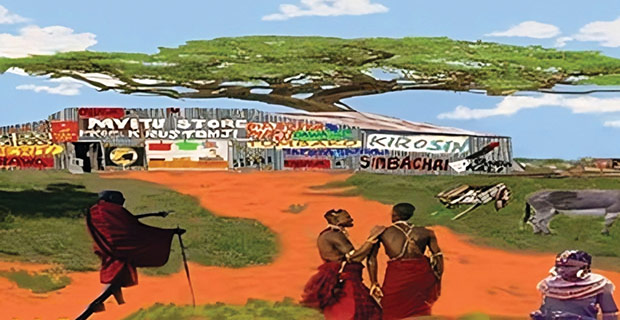
The pioneering Indian Dukawalla or shopkeeper introduced the use of money to buy goods in Eastern Africa. Thus he launched the monetary economy in this part of the world. The Duka, derived from the Hindustani word Dukan, was set up in remote locations after the British built the Uganda Railway at the end of the 19the century.
Housed behind the Duka, the hardy Dukawalla faced wild animals at night, hot sun during the day and isolation from his relatives and friends but he persisted and survived. Over time, he built a stone structure and then enlarged the building as his business flourished. More traders came and the sole Duka multiplied into many more and their location became a mini-township with administrative services moving in. All over Eastern Africa, these Dukas can still be seen in isolated locations and observe them as foundations of every town and city as the bazaar created by these Dukas. The Dukawalas have, in no small measure, played an important role in the economic growth of Kenya, Uganda and Tanzania: and also Zambia and Malawi.
The story of Dukawalla is the heroic story of hard work, persistence and survival against massive odds. Kersi Rustomji, born in Mwanza, Tanzania, grew up with these Dukas and his keen observation and attention to detail in his colourful “Ode to Indian Dukawalla” and the illustrations are historic documents for the Indian diaspora.
To read more visit: https://indiaempire.com/article/329/the_dukawalla_that_built___eastern_africa
Related News.
-
September 2026 Gorillas Find Names
-

September 2026 India–Kiribati Deepen Cooperation
-

September 2026 India, Ethiopia Deepen Defence Ties
-

September 2026 JAMAICA AT 64,TIES DEEPEN

EDITOR'S DESK, Sep 2026
 Our cover takes us to Volcanoes National Park, where Rwanda recently hosted the 21st Kwita Izina, its annual Gorilla Naming Ceremony. Twenty-two baby mountain gorillas received their names, but the significance of the occasion went far beyond a celebration of wildlife...
more...
Our cover takes us to Volcanoes National Park, where Rwanda recently hosted the 21st Kwita Izina, its annual Gorilla Naming Ceremony. Twenty-two baby mountain gorillas received their names, but the significance of the occasion went far beyond a celebration of wildlife...
more...
Ads Spot


Comments.