

Editor-in-Chief’s Letter
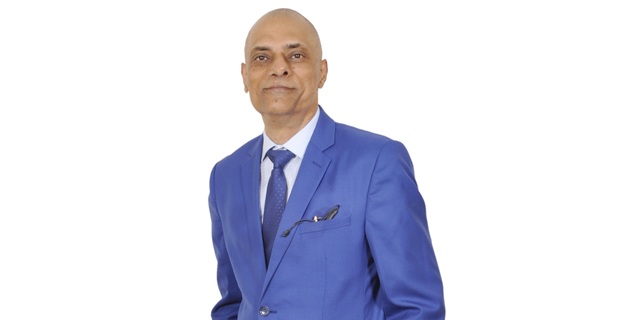
Some conversations acquire a life beyond the interview itself.
My conversation with Shri Gajendra Singh Shekhawat, Union Minister for Culture and Tourism, is the Cover Story of this issue. What began with the preservation of India’s civilisational heritage and the restitution of antiquities moved naturally through manuscripts, artificial intelligence, cultural mapping, tourism and UNESCO recognition. But it eventually reached something even more personal: the story of the Girmitiya community and the Kolkata Memorial.
The Memorial, which has remained largely neglected, marks the point from which generations of Indians left the homeland for distant shores. I raised the subject with the Minister during our conversation. His response was strikingly direct. He thanked me for bringing the Memorial to his attention, acknowledged its emotional significance for the diaspora and said that he would take up the matter.
There is a separate one-page feature on the Kolkata Memorial in this issue because I felt that the Minister’s response deserved to be recorded on its own. It is rare for an interview to move from questions and answers into a possible act of public intervention. Here, it did. And that is perhaps what makes this conversation particularly meaningful.
The interview itself is deliberately presented as a free-flowing exchange. It does not remain within the neat boundaries of a prepared questionnaire. One answer leads to another, allowing the conversation to travel from India’s tangible and intangible heritage to the restitution of cultural properties, manuscripts, AI, cultural mapping and tourism, before arriving at the Girmitiya story, the Kolkata Memorial and India’s deep cultural connections with Africa.
That breadth is significant.
Because culture, in the India of today, is no longer simply something to be preserved behind glass. It is increasingly being understood as a living instrument of connection: between generations, between communities and between countries. The Minister’s observations about the diaspora are particularly poignant. Indians may have become physically detached from the homeland generations ago, but their emotional connection remains powerful. He speaks of seeing this continuity in South Africa, Mauritius and Malaysia, where language and culture have survived across generations.
The tourism conversation takes the same idea in another direction. India is experiencing extraordinary growth in domestic travel, while changing infrastructure, rising incomes and a new appetite for experience are transforming the tourism landscape. The Minister’s memorable description of a “typhoon” entering India’s tourism industry gives our Cover Story its title.
But perhaps the most compelling thread running through the conversation is that heritage is not static.
A monument can be restored. An antiquity can be brought home. A manuscript can be digitised. A cultural practice can be recognised internationally. A neglected memorial can be brought back into public consciousness. And a community dispersed across oceans can still find a way of keeping its emotional relationship with India alive.
This is also why the Kolkata Memorial matters beyond Kolkata. It is a physical reminder of the journeys that created one of the world’s most extraordinary Indian diasporas. The Minister’s acknowledgement that the Memorial falls across different governmental responsibilities also underlines why such subjects can remain neglected unless someone deliberately brings them back into the conversation.
From this central conversation about culture, heritage and memory, this issue of India Empire travels much further. Our Corner Cover from Benin looks at an Indian entrepreneur building an agricultural and biotechnology ecosystem inside the Glo-Djigbé Industrial Zone, combining farming, precision irrigation, climate-smart agriculture and value addition. It is a very different expression of India-Africa partnership, but it carries the same underlying idea: relationships become meaningful when they create something tangible.
Elsewhere, we examine India’s expanding engagement across the Indo-Pacific, ASEAN, Central Asia, Europe and the Gulf; the growing role of the Indian diaspora; and the economic relationships being shaped around technology, trade, investment, infrastructure and critical minerals.
Taken together, these stories point towards an India whose international presence can no longer be understood through diplomacy alone. It is being built through enterprise and culture, memory and technology, communities and commerce.
That is perhaps the larger story of this August issue. And it begins, appropriately, with a conversation about remembering where we came from, preserving what belongs to us, and deciding what we want to carry forward.
Sayantan Chakravarty
sayantanc@gmail.com
Related News.
-

September 2026 Editor-in-Chief’s Letter
-

July 2026 Editor-in-Chief’s Letter
-

June 2026 Editor-in-Chief’s Letter
-

May 2026 Editor-in-Chief’s Letter


Comments.