

Where Hearts Heal
From pioneering India’s early cardiology breakthroughs to championing affordable heart care, Dr M. Khalilullah’s life’s work reflects a rare union of medical excellence and moral purpose.
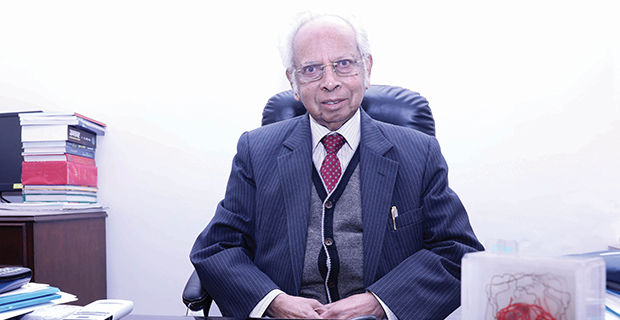
For more than six decades, Dr M. Khalilullah has combined pioneering cardiology with an unwavering commitment to affordable, ethical heart care, ensuring that advanced treatment remains within reach of the poor and the underserved. His career has unfolded alongside the evolution of modern cardiology in India, not as a passive witness, but as one of its principal architects.
Born in pre-independent India, Dr Khalilullah belonged to a generation that did not merely practise cardiology but helped build its foundations. He completed his MBBS in 1960 and MD in Medicine in 1965 from Government Medical College, Nagpur, before joining the then-nascent DM Cardiology programme at the All India Institute of Medical Sciences in 1966. It was a formative moment, both for the young physician and for the speciality itself, which was only beginning to take institutional shape in India.
During his DM training, Dr Khalilullah developed India’s first indigenous pacemaker, later known as the Khalilullah–Mendez (KM) pacemaker. Initially tested in an animal laboratory and subsequently applied clinically, the innovation earned recognition from the President of India. More importantly, it marked an early assertion that Indian cardiology could innovate rather than merely import, and that ingenuity could thrive even within constrained public systems.
After completing his DM in 1969, he briefly set up a cardiology unit at Pune Chest Hospital before joining G.B. Pant Hospital, New Delhi, in 1971. At the time, cardiac catheterisation was limited to a handful of cases each week. Over the next two decades, under his leadership, the department evolved into one of the country’s busiest and most respected centres, performing dozens of advanced procedures daily and serving as a crucible for modern cardiology in India.
Clinical electrophysiology was introduced in 1975, followed by the country’s first catheter ablation in 1984 and the early establishment of arrhythmia surgery, possibly among the first in Asia. Interventional cardiology followed soon after. Balloon valvuloplasty, aortoplasty, peripheral interventions, and later PTCA and CABG were progressively introduced, often under conditions that demanded innovation, restraint, and careful judgement rather than technological excess.
Related News.
-

September 2026 Gorillas Find Names
-

September 2026 India–Kiribati Deepen Cooperation
-

September 2026 India, Ethiopia Deepen Defence Ties
-

September 2026 JAMAICA AT 64,TIES DEEPEN

EDITOR'S DESK, Sep 2026
 Our cover takes us to Volcanoes National Park, where Rwanda recently hosted the 21st Kwita Izina, its annual Gorilla Naming Ceremony. Twenty-two baby mountain gorillas received their names, but the significance of the occasion went far beyond a celebration of wildlife...
more...
Our cover takes us to Volcanoes National Park, where Rwanda recently hosted the 21st Kwita Izina, its annual Gorilla Naming Ceremony. Twenty-two baby mountain gorillas received their names, but the significance of the occasion went far beyond a celebration of wildlife...
more...
Ads Spot

Comments.