

Where Hearts Heal
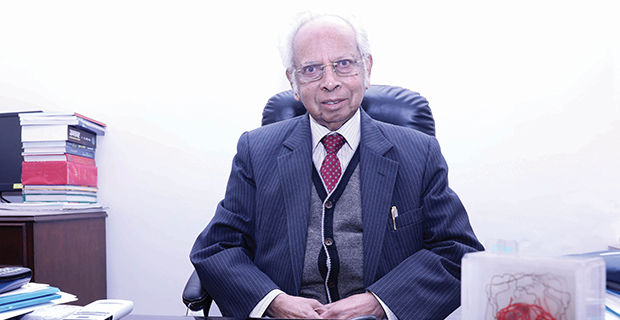
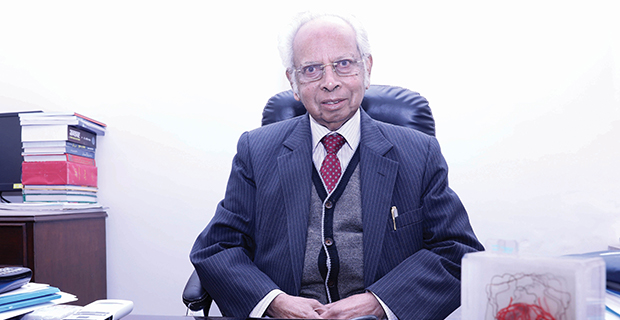
Dr Khalilullah speaks with India Empire’s Business and Diplomatic Editor Yogesh Sood about six decades of cardiology, clinical ethics, and the evolution of heart care in India.
You are one of the senior-most cardiologists in the country. Tell us about your journey.
I started at Government Medical College, Nagpur in 1956 for MBBS, internship, and house job, then did MD there. I joined DM Cardiology at AIIMS in 1966 when it was just starting — two posts and 13 candidates — and completed it in 1969. During residency, I developed India’s first pacemaker in an animal lab followed by human application. After DM, I set up a cardiology centre at Pune Chest Hospital for a salary of Rs 50/month. Later, in 1971, I joined G.B. Pant Hospital, Delhi, progressing to Professor of Cardiology and Director of G.B. Pant Hospital for 8 years. Over the years, the department became one of the country’s leading centres, and a large part of modern cardiology in India grew from there.
What changes have you seen in cardiology over the last fifty years in terms of disease burden and technology?
Cardiology has shifted from diagnosis to treatment. It used to be that we diagnosed and surgeons treated; now cardiologists offer therapy. I did the first cath-ablation in 1984 and the first balloon valvuloplasty in 1985, pioneering treatment without surgery. The private sector also expanded access and financial prospects. Patients now receive advanced care in India rather than going abroad. The new generation of cardiologists has transformed treatment methods.
Ethics are now a major topic in medicine and cardiology. Have ethics changed over time?
Ethics relate to role models. Earlier, professors lived simply and inspired through dedication. Today, societal values have shifted; success is often seen through material markers. This reflects broader societal change, not just medicine. Commitment and a strong personal foundation matter most.
There are many articles today about unnecessary procedures — stents, pacemakers. What’s your view?
It’s unfortunate but not completely accurate. Every procedure has indications, but interpretations vary. In fairness, doctors should not do anything unjust to a patient.
The cost of stents and devices is high, making procedures unaffordable for many. What do you think?
Our country imports almost all pacemakers and valves. Why haven’t we developed our own devices? This isn’t just a medical problem but a national issue involving industry, government, and society.
What would be your message to students who want to become cardiologists?
Medicine requires total commitment and dedication; material priorities should be secondary. Over time, reputation and respect will grow. Society must also appreciate doctors for the profession to flourish.
Related News.
-

September 2026 Gorillas Find Names
-

September 2026 India–Kiribati Deepen Cooperation
-

September 2026 India, Ethiopia Deepen Defence Ties
-

September 2026 JAMAICA AT 64,TIES DEEPEN

EDITOR'S DESK, Sep 2026
 Our cover takes us to Volcanoes National Park, where Rwanda recently hosted the 21st Kwita Izina, its annual Gorilla Naming Ceremony. Twenty-two baby mountain gorillas received their names, but the significance of the occasion went far beyond a celebration of wildlife...
more...
Our cover takes us to Volcanoes National Park, where Rwanda recently hosted the 21st Kwita Izina, its annual Gorilla Naming Ceremony. Twenty-two baby mountain gorillas received their names, but the significance of the occasion went far beyond a celebration of wildlife...
more...
Ads Spot

Comments.