

A NEW CHAPTER
The Message From Delhi
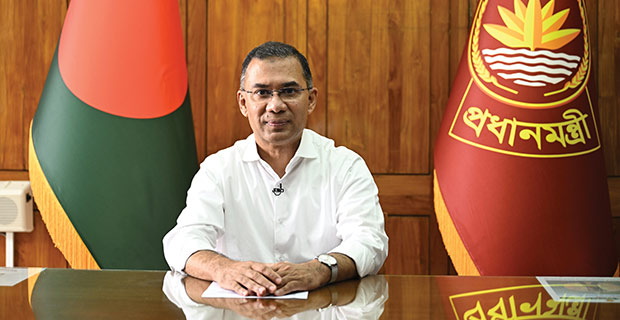
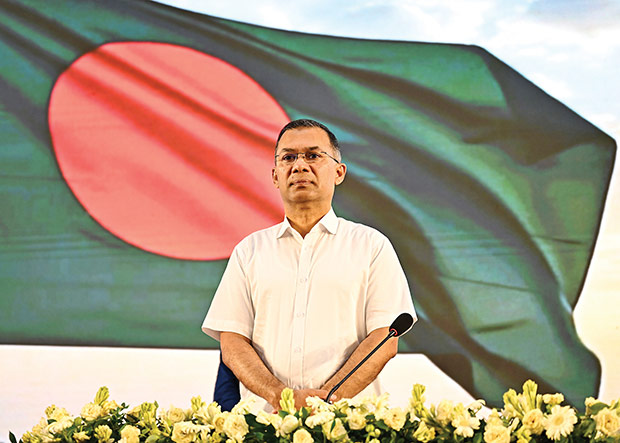
India’s first high-level signals came through a moment of personal loss. External Affairs Minister Dr S Jaishankar travelled to Dhaka to attend Begum Khaleda Zia’s funeral. During the visit, he met Prime Minister Rahman and handed him a personal letter of condolence from Prime Minister Narendra Modi. Dr Jaishankar said he hoped Begum Khaleda Zia’s “vision and values” would guide the development of the partnership between the two neighbours.
The meeting was significant because relations had deteriorated sharply after Sheikh Hasina’s removal. Her presence in India, the circumstances of her departure and the political atmosphere in Bangladesh became sources of friction. Dhaka’s interim administration under Muhammad Yunus pursued a foreign policy widely seen as less aligned with New Delhi, while tensions over security, public statements and bilateral expectations made progress difficult.
It is important to distinguish the diplomatic gestures that followed Begum Khaleda Zia’s death. Defence Minister Rajnath Singh visited the Bangladesh High Commission in New Delhi to sign the condolence book. Dr Jaishankar was the Indian minister who travelled to Dhaka and met Prime Minister Rahman. The two events reflected India’s official condolences, but they were not the same meeting.
India’s engagement continued after the election. Prime Minister Modi congratulated Prime Minister Rahman on the BNP’s victory and spoke to him by telephone. In his public message, the Indian Prime Minister said: “India will continue to stand in support of a democratic, progressive and inclusive Bangladesh.” He also expressed a desire to work with Prime Minister Rahman to strengthen the two countries’ multifaceted relations and advance common development goals.
The wording offered a path towards cooperation without suggesting that the difficult issues between the neighbours had disappeared. It also placed the relationship in the context of democratic legitimacy and shared interests rather than personal affinity between leaders.
A Wider International Welcome
Prime Minister Rahman’s victory drew messages from leaders across the globe. United States Secretary of State Marco Rubio congratulated the BNP and Prime Minister Rahman, saying Washington looked forward to working with the new government to advance “prosperity and the security of the region”. China, too, welcomed the election and expressed readiness to work with the new administration. These messages signalled that major powers and regional partners intended to engage with the government that had emerged from the vote.
For Prime Minister Rahman, that breadth of attention brings opportunity as well as pressure. Bangladesh needs investment, export markets, energy security and employment. It also needs room to pursue its interests without becoming dependent on any single external partner.
In interviews before the election, Prime Minister Rahman described a desire to attract investment while avoiding excessive reliance on one power. That balancing act will be watched closely in New Delhi, Beijing, Washington and elsewhere. Bangladesh’s foreign policy will reflect its own priorities, and India cannot assume that geographical proximity guarantees political alignment. Equally, Dhaka cannot ignore the practical realities of its relationship with its largest neighbour.
Rahman’s approach to India is better judged by what his government has done than by what it has said. Dhaka’s decision to send its serving Foreign Secretary, Asad Alam Siam, to New Delhi as High Commissioner signals a wish to give the relationship real weight, while his pre-election pledge to attract investment without excessive reliance on any one power, framed by the BNP’s “Bangladesh First” manifesto, points to balance rather than alignment. The test will be whether that balance can accommodate the unresolved issues of Teesta water-sharing, border security and Sheikh Hasina’s presence in India.
Related News.
-

September 2026 Gorillas Find Names
-

September 2026 India–Kiribati Deepen Cooperation
-

September 2026 India, Ethiopia Deepen Defence Ties
-

September 2026 JAMAICA AT 64,TIES DEEPEN


Comments.