

Trade Doors Open
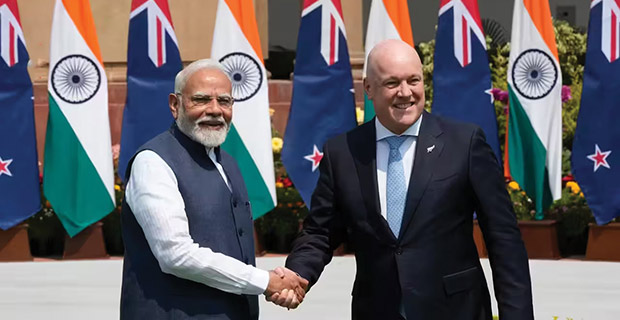
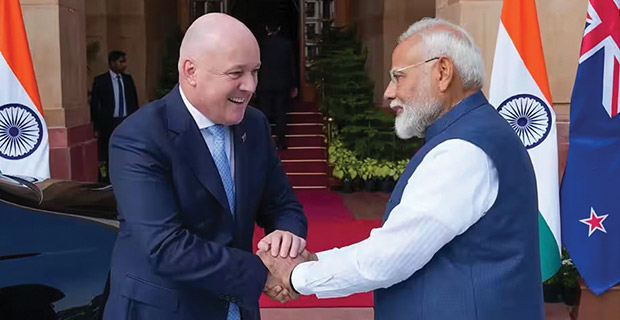
The minister also sees energy security, particularly renewable energy, as another field in which the relationship can expand. Trade is now being added to a wider architecture of cooperation that includes education, agriculture, technology, investment, security and defence. Mr McClay noted that the two countries had already negotiated and signed agreements in several areas, including security, and said their military forces would undertake constructive activities together. The July visit of Prime Minister Modi to New Zealand also provided fresh momentum to the bilateral relationship.
For India, the FTA arrives at a moment when the country’s economic transformation is drawing close attention abroad. As Prime Minister Modi approaches 25 uninterrupted years in public life on October 7, Mr McClay pointed to developments in education and infrastructure as notable features of India’s economic evolution. He referred to India’s continued expansion of universities and the scale of infrastructure investment, viewing these developments alongside the country’s broader ambition of becoming a developed economy by 2047.
Yet Mr McClay was careful to place the trade agreement within a much larger bilateral canvas. “The trade agreement is only a start of the effort, focus and investment that the New Zealand Government wants to make in our relationship with India,” he said. The sentiment reflects an agreement whose implications stretch beyond customs duties. Easier movement for professionals, students and young people, greater investment flows, agricultural cooperation, technology partnerships, renewable energy and services all form part of the emerging relationship.
The immediate next step is procedural. New Zealand must complete the formal process of bringing the legislation into law, after which the two countries will exchange diplomatic notes when their respective domestic requirements are complete. Mr McClay expects the FTA to enter into force within the next month. He also indicated that New Zealand businesses are already positioning themselves for the opportunities that implementation will bring. His own plans include a visit to India before the end of the year, although New Zealand’s upcoming election is his immediate priority.
The passage of the legislation therefore marks less a conclusion than the opening of a new commercial chapter. The tariff barriers are set to fall, businesses are beginning to prepare, and the political commitment to doubling bilateral trade by 2030 provides an ambitious horizon. For Indian exporters, particularly in manufacturing, pharmaceuticals, engineering, textiles, agriculture and food processing, the immediate proposition is clear: a market of New Zealand consumers with full tariff-free access from day one. For New Zealand, the prize lies in greater access to India’s vast and expanding market, alongside partnerships in food, agriculture, technology, services, investment and renewable energy.
Related News.
-

October 2026 A NEW CHAPTER
-

October 2026 “We Can Be A Gateway”
-

October 2026 “Come And See Ecuador”
-

October 2026 Confidence Across Continents
India Empire TV


EDITOR'S DESK, Oct 2026
 The October 2026 issue of India Empire explores a world in which diplomacy, commerce, innovation and human connections increasingly shape one another. Across our stories, a recurring theme emerges: relationships acquire lasting value when goodwill is translated into practical outcomes...
more...
Ads Spot


Comments.