

Diaspora Under Siege Rising Hostility
From coups and expulsions to campus hostility and digital hate, the Indian diaspora’s global experience reveals a recurring truth: success abroad often invites suspicion, resentment, and backlash.
You cannot ignore the warnings anymore. Hostility confronting the Indian diaspora today is often dismissed as background noise—an isolated protest here, a vandalised temple there, an ugly social-media trend elsewhere. Step back, connect the dots, and the picture becomes impossible to overlook.
Indians around the world are increasingly targeted, not merely because of migration, but because of what follows it. Ashook Ramsaran, President of the Indian Diaspora Council, argues that resentment grows from “higher than average achievement success rates” across sectors of society. That success, he notes, fuels misplaced fear, political rhetoric, and a growing “sense of losing control” among entrenched populations, even as Indian communities contribute disproportionately to economic growth and social stability, with America “closing its doors to the world, sealing the border, squeezing the legal avenues to entry.”
Why does Indian success abroad so often provoke resentment rather than respect? Why does visibility become vulnerability?
Across continents and generations, Indian-origin communities have faced a consistent response once they move from labour to leadership, from survival to influence. This is not coincidence. It is pattern.
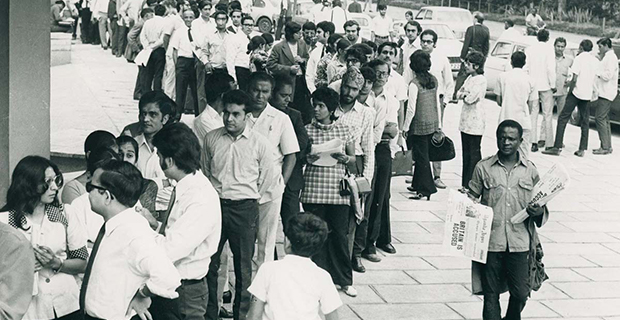
To understand that pattern, one must return to indenture. After slavery’s abolition, millions of Indians were transported by colonial powers to Africa, the Caribbean, and the Pacific as indentured labour—contractually bound, politically powerless, and socially segregated. They were tolerated because they were useful. Indenture ended formally, yet its social logic endured.
As Prof. Ajay Dubey of Jawaharlal Nehru University observes, wherever the Indian diaspora became a top achiever, it faced “the same anger and hate” from natives and other settlers. The repetition, he argues, now gives the picture of a globally hostile environment—one that presents both a challenge and a test of resilience.
Australia and New Zealand: Conditional Acceptance
In 2025, several Australian cities witnessed protests targeting Indian communities. Officially framed as local grievances, these mobilisations were laced with anxiety over culture, numbers, and economic presence. Diwali celebrations were questioned in public spaces. Indian students reported hostility on campuses. Online platforms amplified narratives portraying Indians as “too dominant,” “too visible,” or simply “too many.”
The unease has not gone unanswered by diaspora leaders themselves. Umesh Chandra, Brisbane-based Executive Vice President of GOPIO International, condemns what he describes as the “recent Bondi incident and all forms of anti-Indian hate in Australia,” stressing that Indian communities “stand united, demand accountability, and seek justice.” His intervention reflects a growing recognition within the diaspora that silence no longer offers protection—and that visibility must now be matched by collective assertion.
Across the Tasman, New Zealand mirrored the drift. Temples were vandalised. Indian-origin residents reported harassment ranging from overt abuse to subtler workplace exclusion linked to accent or appearance. These are societies that actively recruit Indian talent—yet recoil when that talent becomes confident, cohesive, and culturally assertive.
The phenomenon is not confined to the Anglosphere. In the Francophone world, cultural assertion has provoked similar unease. In Reunion Island, where people of Indian origin constitute nearly 35 per cent of the population, journalist and historian Dr Jean Regis Ramsamy recalls how symbolic exclusion quickly translated into community anxiety. In 2008, a Diwali procession was moved out of the city of Saint-André by a newly elected mayor, triggering widespread resentment. Acts of vandalism against places of worship, he notes, surface periodically, reinforcing a sense of conditional belonging. Cultural visibility, even in long-settled societies, remains contested terrain.
Related News.
-

September 2026 Healing Beyond Borders
-

September 2026 MARRIAGE BEYOND BORDERS CROSS-BORDER JUSTICE
-

September 2026 Diaspora, Defence And Growth
-

September 2026 President in Romania

EDITOR'S DESK, Sep 2026
 Our cover takes us to Volcanoes National Park, where Rwanda recently hosted the 21st Kwita Izina, its annual Gorilla Naming Ceremony. Twenty-two baby mountain gorillas received their names, but the significance of the occasion went far beyond a celebration of wildlife...
more...
Our cover takes us to Volcanoes National Park, where Rwanda recently hosted the 21st Kwita Izina, its annual Gorilla Naming Ceremony. Twenty-two baby mountain gorillas received their names, but the significance of the occasion went far beyond a celebration of wildlife...
more...
Ads Spot


Comments.