

Diaspora Under Siege Rising Hostility
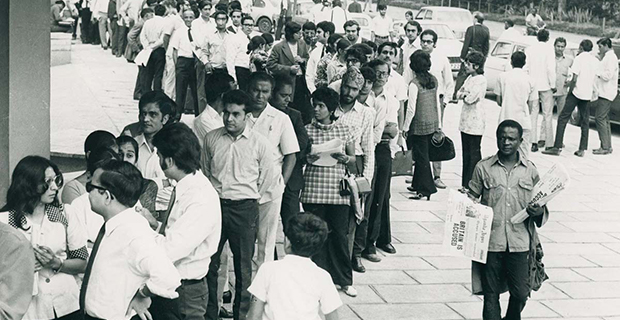
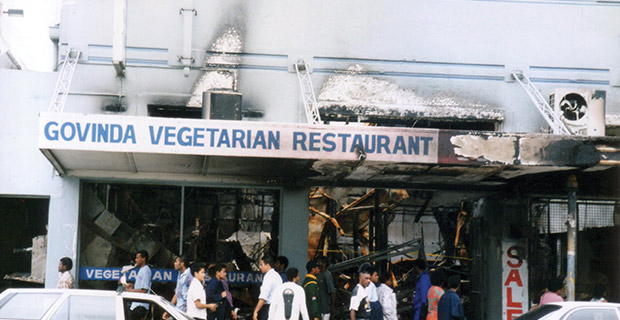
The charred shell of Govinda’s Indian Restaurant in Suva stands as a haunting symbol of the destruction inflicted on Indo-Fijian lives during the 2000 coup crisis.
Fiji: Democracy as a Trigger
Few cases expose political targeting more starkly than Fiji. Indians arrived as indentured labourers in the late nineteenth century—economically indispensable yet politically invisible. Over time, they became central to commerce and democratic politics. That visibility proved destabilising.
In 1987, coups overthrew a government with strong Indian participation. In 2000, armed insurgents stormed Parliament and took Prime Minister Mahendra Chaudhry hostage. Homes were looted, businesses destroyed, and lives uprooted. A mass exodus followed.
Maharaj highlights Fiji as a cautionary case where Indian communities crossed from economic relevance into political power and were punished for it.
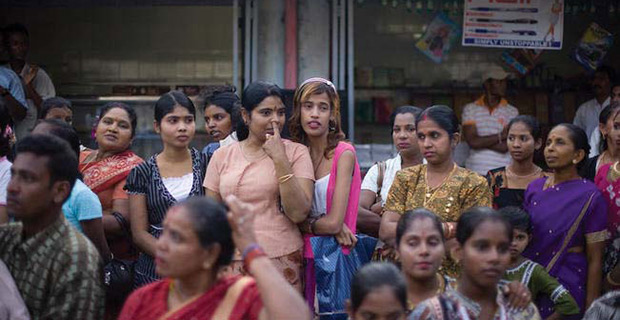
Myanmar’s stateless minority endures life without rights or recognition, as questions mount over whether India can offer meaningful relief and leadership.
Myanmar: Stateless by Design
Some of the most vulnerable Indians live far from headlines. In Myanmar, descendants of traders, labourers, and professionals who arrived in the 1930s remain stateless generations later. No passports. No political rights. No access to higher education or property. Just bureaucratic erasure and gradual assimilation.
Dr Amba Pande of Jawaharlal Nehru University notes that while “some Indian migrants were economically influential” and, in certain cases, engaged in exploitative practices, the majority were labourers. Their descendants, she argues, “still suffer from the negative perceptions created during the colonial era.” What makes Myanmar particularly troubling is that hostility toward Indians is now “too apparent to be brushed off” or managed through polite diplomatic statements from New Delhi.
Myanmar, Pande adds, introduces a distinct strategic dimension. The diaspora lives in a neighbouring country with multiple geo-strategic sensitivities, making community protection inseparable from India’s regional interests. Safeguarding the diaspora, she stresses, “cannot be ignored any longer.”
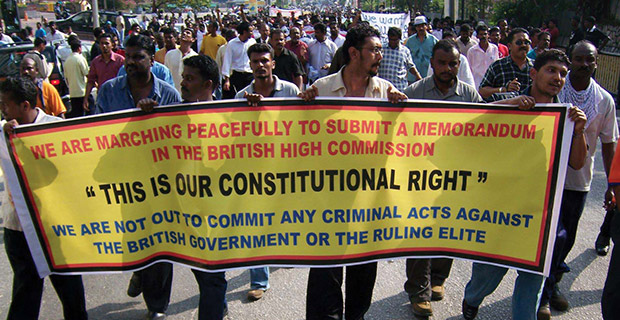
Malaysian PIOs take to the streets to protest constitutional policies they say entrenched racial inequality and reduced Indians to permanent second-class citizens.
Malaysia: Discrimination with a Rulebook
In Malaysia, Indian-origin communities face exclusion that is codified rather than episodic. Bumiputra policies favour ethnic Malays in land ownership, education, housing, and public employment. Despite generations of contribution, Indian Malaysians remain boxed out.
Dr Kamalanathan Sappani, a medical doctor and community leader, traces this marginalisation to post-1969 restructuring, when ethnic preference became institutionalised through the New Economic Policy. Recruitment into civil services narrowed, educational access shifted to quota-based systems, and merit-driven pathways steadily closed. Their participation in state institutions declined sharply. Sappani describes the result as sustained “institutional containment,” increasingly restrictive over time.
Related News.
-

September 2026 Healing Beyond Borders
-

September 2026 MARRIAGE BEYOND BORDERS CROSS-BORDER JUSTICE
-

September 2026 Diaspora, Defence And Growth
-

September 2026 President in Romania

EDITOR'S DESK, Sep 2026
 Our cover takes us to Volcanoes National Park, where Rwanda recently hosted the 21st Kwita Izina, its annual Gorilla Naming Ceremony. Twenty-two baby mountain gorillas received their names, but the significance of the occasion went far beyond a celebration of wildlife...
more...
Our cover takes us to Volcanoes National Park, where Rwanda recently hosted the 21st Kwita Izina, its annual Gorilla Naming Ceremony. Twenty-two baby mountain gorillas received their names, but the significance of the occasion went far beyond a celebration of wildlife...
more...
Ads Spot


Comments.